Federal Income Tax Guide 2026: Rates, Brackets, Deductions and Filing Rules
Federal Income Tax is the U.S. government’s tax on the income individuals, households and businesses earn that is subject to taxation. There are 10 progressive federal income tax rates for individuals with 10% being the minimum and 37% being the maximum income tax rate.
The guide provides information on the 2026 federal income tax brackets, tax standard deduction, adjusted gross income, tax credits and tax filing process, Tax Rates for Capital Gains. It also makes clear an important point, namely, that income earned in 2025 generally will be reported on returns filed in 2026, and income earned during tax year 2026 generally will be reported on returns filed in 2027.
Tax information changes regularly. Confirm figures and eligibility rules with current IRS publications or a qualified tax professional before filing.
Federal Income Tax 2026: Quick Facts
| Tax item | Current information |
|---|---|
| Ordinary federal income tax rates | 10%, 12%, 22%, 24%, 32%, 35% and 37% |
| 2026 standard deduction—single | $16,100 |
| 2026 standard deduction—married filing jointly | $32,200 |
| 2026 standard deduction—head of household | $24,150 |
| Maximum ordinary federal tax rate | 37% |
| 2025 return regular deadline | April 15, 2026 |
| 2025 return extension deadline | October 15, 2026 |
| 2026 income generally reported | On a return filed in 2027 |
Brackets and deductions for 2026 will be in effect for earned income from Jan. 1–Dec. 31, 2026. Generally they affect the return that is filed for 2027. Most 2025 individual tax returns had a filing deadline of April 15, 2026, compared to the current filing deadline.
What Is Federal Income Tax in the USA?
Any income tax that is withheld by the federal government on income that is covered by income tax. Wages and salaries, tips, self-employment income, interest and dividends, rental income and retirement income and capital gains are some examples of income.
Federal income taxes do not include payroll taxes (such as social security and Medicare taxes). It is not based on any state/ local income taxes that may be levied on the taxpayer based on where he or she resides and/or works.
All of the United States has a progressive federal income tax system. This will result in more of the income in a higher tax bracket than before. Just because one moves up a bracket doesn’t mean that all income is subject to the higher rate of taxation. That is only the income within that range that will get that rate.
How Federal Income Tax Works
A simplified individual federal tax calculation follows this sequence:
- Add taxable sources of income.
- Subtract eligible adjustments to income.
- Calculate adjusted gross income.
- Subtract the standard deduction or itemized deductions.
- Subtract any other eligible deductions.
- Apply federal tax brackets to taxable income.
- Add other applicable taxes.
- Subtract eligible tax credits.
- Compare final tax liability with withholding and estimated payments.
When payment and withholding exceeds final tax liability, taxpayers might have a tax refund. If they are less, it may be because that there is an outstanding balance to be paid by the taxpayer.
Gross Income, AGI and Taxable Income
These terms may not have the same meaning, but are related.
Generally, income that is earned or received from employment, business, investments, retirement plans or other sources is considered gross income.
Adjusted Gross Income or federal AGI is gross taxable income minus any adjustments allowed on the federal tax form. The Internal Revenue Service (IRS) defines AGI as “total gross income minus certain adjustments reported on the tax return.
Adjustments that can be made to the IRA include: eligible health savings account contributions, deductible student-loan interest, certain self-employed expenses and qualifying IRA contributions.
Taxable income, in general, is adjusted by the standard deduction or deductible itemized deductions, as well as other deductions that are given under current law.
A simple formula:
Gross income − adjustments = AGI
AGI − deductions = taxable income
The tax brackets are provided for taxable income and not necessarily gross income or salary.
Marginal Rate Versus Effective Tax Rate
The highest rate of your taxable income is the rate of your marginal tax rate.
Effective tax rates are the total amount of federal income taxes divided by the income amount used to calculate the tax.
The highest bracket example (22%): If you fall into the 22% bracket, then you will not be taxed at 22% on all taxable income. The lower parts of the tax rates are the 10% and 12%. The real rate of taxation is, therefore, normally less than the marginal rate of taxation.
This is an explanation of the frequently asked question, “What is the Federal tax percentage?” The percentage of the Federal income tax isn’t the same for everyone. This will depend on the amount of taxable income, filing status, deductions and credits (and other tax circumstances).
The Federal income tax rates for 2026 are shown above.
2026 Federal Income Tax Brackets
The following U.S. Tax Brackets apply to ordinary taxable income earned during tax year 2026.
| Rate | Single filer | Married filing jointly | Head of household |
| 10% | $0–$12,400 | $0–$24,800 | $0–$17,700 |
| 12% | $12,401–$50,400 | $24,801–$100,800 | $17,701–$67,450 |
| 22% | $50,401–$105,700 | $100,801–$211,400 | $67,451–$105,700 |
| 24% | $105,701–$201,775 | $211,401–$403,550 | $105,701–$201,775 |
| 32% | $201,776–$256,225 | $403,551–$512,450 | $201,776–$256,200 |
| 35% | $256,226–$640,600 | $512,451–$768,700 | $256,201–$640,600 |
| 37% | $640,601 or more | $768,701 or more | $640,601 or more |
These brackets are for Taxable Income, and will typically apply to tax returns for 2027.
Married taxpayers filing separately will be on a separate schedule. In 2026, their 37% bracket will start at over $384,350 in taxable income.
What Is the Maximum Federal Tax Rate?
The top federal income tax rate in 2026 is 37% ordinary income tax rate.
The rate for single filers begins to climb to 37% on an income of over $640,600. For those who are married and filing together, it is at an income greater than $768,700. The amount of income over the relevant threshold is subject to 37% tax rate.
2026 Standard Deduction and Federal Tax Deductions
A Tax Deduction is a deduction that reduces the amount of income that will be subject to income tax. Does not typically take in place tax dollar for tax dollar.
The standard deduction is:
- $16,100 for single filers and married taxpayers filing separately.
- $32,200 for married couples filing jointly.
- $24,150 for heads of household.
Other standard-deductions may be available for taxpayers age 65 and up or who are blind.
Standard Versus Itemized Deductions
The standard deduction is fixed, and depends primarily on filing status.
These can be mortgage interest (or interest on a loan for a second home), taxes on state and local real property and income taxes, and medical expenses that exceed what is allowed on the line above.
The typical taxpayer will need to compare the deductions that he can claim against the standard deduction, and then select the one that will yield a greater deduction.
Rules & restrictions apply for eligibility. In order to be deductible, expenses need to be in a particular category.
Additional Federal Tax Deductions
In addition, there are a couple of extra deductions and income phase-out or eligibility requirements that will apply to tax years 2025-2028:
- A deduction of up to $6,000 for an eligible taxpayer age 65 or older.
- A qualified-tip deduction of up to $25,000.
- A qualified-overtime deduction of up to $12,500, or $25,000 on a joint return.
- A deduction of up to $10,000 for eligible interest on a qualifying passenger-vehicle loan.
All overtime or tips are not necessarily tax-free with the tip and overtime provisions. The income must be reported and the taxpayer will have to claim the allowed deduction if he/she is eligible. This car-loan offer is only available for qualifying cars and loans.
The amount of the combined state and local income, sales and property tax deductions was raised for tax year 2025 to $40,000 ($20,000 for married taxpayers filing separately). It might be lower for taxpayers who have incomes over certain modified-AGI thresholds. A person should check on the limit for his tax year before filing a subsequent tax year.
Deductions Versus Tax Credits
A deduction reduces taxable income.
A tax credit is a reduction in the tax liability that is computed. Thus, a $1,000 qualifying credit could save a taxpayer up to $1,000 on taxes and the $1,000 deduction can vary by taxpayer’s circumstances and rate.
The following are just a few of the individual credits that may be earned:
- Child Tax Credit.
- Earned Income Tax Credit.
- American Opportunity Tax Credit.
- Lifetime Learning Credit.
- Child and Dependent Care Credit.
- Adoption Credit.
A few credits are refundable, a few are partially refundable and a few are not refundable. The eligibility and income requirements are subject to change from credit.
The highest amount of Earned Income Tax Credit for tax year 2026 is $8,231 if a taxpayer has three or more qualifying children. The highest amount of Child Tax Credit is $2,200 per eligible child, depending on the requirements.
How to Calculate Federal Income Tax
A reliable estimate requires more than multiplying total income by one percentage.
Use these steps:
- Determine filing status.
- Add taxable income.
- Subtract eligible adjustments to calculate AGI.
- Subtract permitted deductions.
- Calculate taxable income.
- Apply each federal tax bracket separately.
- Add the tax generated by each bracket.
- Subtract eligible credits.
- Add other taxes where applicable.
- Compare the result with withholding and estimated payments.
Worked Example for a Single Filer
Assume that one taxpayer will earn a taxable income of $60,000 in 2026. In this example, the taxable income is the amount that is not subject to standard deduction, so the standard deduction is not subtracted once again.
- First $12,400 taxed at 10% = $1,240
- Next $38,000 taxed at 12% = $4,560
- Remaining $9,600 taxed at 22% = $2,112
Estimated ordinary federal income tax before credits: $7,912
The effective rate on the $60,000 of taxable income is about 13.2% while the marginal rate is 22%.
Let’s take another example: A single taxpayer makes $60,000 of gross income and has no other adjustments or deductions, and is eligible for the maximum standard deduction of $16,100.
Estimated taxable income would be:
$60,000 − $16,100 = $43,900
The estimated bracket tax would then be:
- First $12,400 at 10% = $1,240
- Remaining $31,500 at 12% = $3,780
Estimated tax before credits: $5,020
The examples are not exhaustive and won’t comprise of all adjustment, credits or special income categories and other adjustments.
Federal Tax Filing Deadlines and Steps
The majority of the individual federal income tax returns for 2025 were due April 15, 2026. As for those who received an extension, they should have until October 15, 2026, to submit their taxes if they received a valid extension. An extension does not give the taxpayer any extra time to pay the tax debts; an extension of time within which the tax return is filed.
Typically the individual tax returns for 2026 would be the 2026 tax year returns. Filing-season dates are announced by the IRS and tax filing may be extended to different dates for taxpayers impacted by a disaster or other special situations.
Documents You May Need
Common filing documents include:
- Form W-2 from employers.
- Forms 1099 for interest, dividends, contract work, retirement distributions and other income.
- Form 1098 for certain mortgage interest.
- Records of estimated tax payments.
- Receipts and statements supporting deductions.
- Records supporting tax credits.
- Social Security numbers or other valid taxpayer identification numbers.
- The previous year’s return.
- Bank information for direct deposit or electronic payment.
Reporting documents should be compared with personal records before filing.
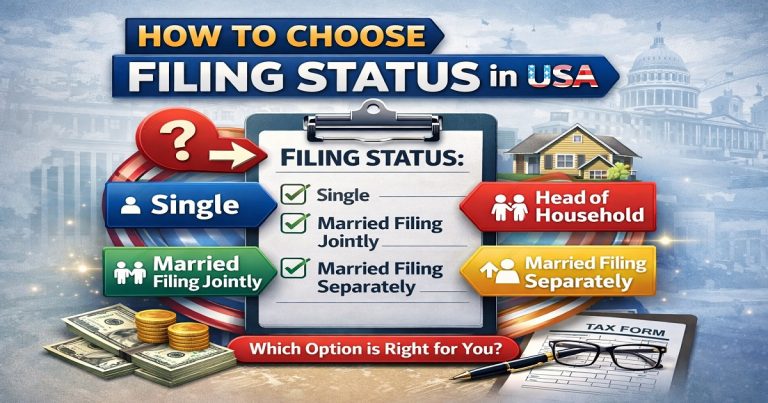
Filing Status
Common filing statuses are:
- Single.
- Married filing jointly.
- Married filing separately.
- Head of household.
- Qualifying surviving spouse.
Filing status impacts brackets, standard deduction, whether or not you qualify for a credit and other tax rules. No one will purposefully select a filing status with regard to what they want to receive, but IRS requirements must be met.
Extensions and Estimated Tax
The general rule is that an extension of time will be granted for filing an individual tax return on Form 4868. Taxpayers should estimate as best they can the amount to be paid and pay that amount by the regular payment date to reduce the interest and penalties.
People who don’t get the income they need from withholding might need to pay estimated taxes. This may also apply to those who have non-wage income – such as self-employed individuals, landlords and investors.
The typical 2026 estimated-payment dates are April 15, June 15 and September 15, 2026, plus any special rules and weekend/holiday adjustments, with the last date on January 15, 2027.
Free Filing and IRS Direct Pay
If their 2025 AGI was $89,000 or less, IRS Free File gave these taxpayers access to IRS Free File guided software for 2026. Income limits are subject to change from year to year, and should be verified prior to filing.
IRS Direct Pay is the method taxpayers can pay qualified federal taxes through a bank account for free. Can be utilized for balance due, estimated tax and a few other individual payment categories. The taxpayers need to keep the confirmation number of each payment.
Federal Capital Gains Tax
The ordinary federal income tax brackets are not necessarily used for capital gains.
A short-term capital gain, on the other hand, is typically a gain from a short-term sale or redemption of a capital asset, which is generally considered to be one year or less, and is generally taxed at ordinary income rates.
Generally, a long-term capital gain is the result of an asset that is held for more than a year, and can be taxed at 0%, 15% or 20% at the federal rate, depending on the taxpayer’s filing status and taxable income. Special rates may be applicable to certain property/gains.
The 15/25% bracket for long-term capital gains will start above $49,450 of taxable income for an unmarried individual, $98,900 for married people filing jointly and $66,200 for heads of household for tax year 2026. The 20% bracket begins above $545,500, $613,700 and $579,600 respectively.
Additionally, it is possible some of the higher income taxpayers could end up with greater income tax liabilities under the Net Investment Income Tax of 3.8%. Calculating capital gains can be more complex than calculating ordinary income, due to other factors like basis, loss offsets, special asset rules, etc., so it’s best to calculate capital gains separately from an ordinary income example.
Refund Delays, Lost Refunds and Rejected Returns
Processing most individual returns takes 21 days, if filed electronically, although the time may be longer for some returns. Details about the processing of an electronic returns from the current year will be available approximately 24 hours after e-filing.
A refund may take longer because of:
- Incorrect or incomplete information.
- Identity-verification requirements.
- A credit requiring additional review.
- A mismatch with information reported to the IRS.
- An injured-spouse claim.
- A paper-filed return.
- Suspected identity theft or fraud.
- A return selected for manual processing.
Common Federal Tax Filing Mistakes
Avoid these frequent errors:
- Using the wrong tax year’s brackets or deduction amounts.
- Confusing gross income with AGI or taxable income.
- Applying the marginal rate to all income.
- Selecting an ineligible filing status.
- Entering an incorrect Social Security number.
- Omitting W-2 or 1099 income.
- Claiming unsupported deductions or credits.
- Failing to report taxable gig or cash income.
- Using incorrect bank information.
- Missing a signature on a paper return.
- Assuming an extension also extends the payment deadline.
- Failing to keep supporting records.
- Ignoring an IRS Rejection or Notice.
Final Thoughts
The average federal income tax rates will be 10%-37% in 2026. The filing status, deductions, credits, withholding and type of income will all impact on the result.
Frequently Asked Questions About Federal Income Tax
What is the federal income tax rate in 2026?
The ordinary federal income tax rates for tax year 2026 are 10%, 12%, 22%, 24%, 32%, 35% and 37%. The brackets for a particular income level and filing status will differ.
What percentage of my income goes to federal tax?
But there is no percentage for each tax-payer.
What is the maximum federal income tax rate?
Ordinary rate of max 37%. It will start at $640,600 of taxable income for singles and $768,700 for married couples filing jointly in 2026.
Does entering a higher tax bracket tax all my income at that rate?
The lower brackets still continue to get lower rates of income.
What is federal adjusted gross income?
Typically federal AGI is equal to gross income of all kinds, minus adjustments to income that are eligible for federal taxes.
What is the standard deduction for 2026?
The standard deduction will be $16,100 for all single and married filing separately filers, $32,200 for joint filers and $24,150 for heads of household in 2026.
What is the difference between a tax deduction and a tax credit?
A reduction in the amount of taxable income is a deduction. A credit is a reduction from the amount of taxes that you would owe if the amount of taxes you calculated is higher than the amount of taxes you actually owe, and it could be refundable, partially refundable or non-refundable.
When was the federal tax filing deadline in 2026?
April 15, 2026 was the due date for most of 2025 individual returns. The extended deadline of October 15th was generally for the tax return, with the tax owed still generally due April 15.
Why is my federal refund taking so long?
This can be due to incorrect information, identity verification, paper filing, manual review or missing forms/claims that need to be processed. Most e-filed Form 1040 returns are processed in 21 days – however, this is not guaranteed by the Internal Revenue Service (IRS).
What does a rejected federal tax return mean?
Check the rejection code, make corrections to the problem and turn in the return in a timely manner.
What should I do if my federal refund check is lost?
First, check on the status of the refund. If it’s more than the normal processing/replacement check time, request a refund trace.
What is IRS Direct Pay?
IRS Direct Pay lets personal federal tax filers pay their taxes eligible for the program directly from their checking or savings account—free of charge.
Are federal capital gains taxed at the same rates as wages?
The long-term gains rates for qualifying long-term gains may be different (0%, 15% or 20% depending on taxable income and filing status).
Are federal taxes different for small businesses?
Yes. Business structure, payroll, self-employment income, estimated payments, deductions and information-reporting requirements and obligations may result in a different calculation.