Capital Gains Tax: U.S. Rates, Rules, Calculations & Examples
Capital Gains Tax is the tax which you may be liable to pay if you sell a capital asset at a price higher than its adjusted cost. These may be stocks, mutual funds, cryptocurrency, real estate, investments and more. The tax is usually charged on the recognition of the gain (when the asset is sold or disposed of) and not merely because of an increase in value.
Actual Capital Gains Taxes will not only be sensitive to your taxable income and filing status, but also your holding period, type of asset, cost basis, capital losses, special tax treatment provisions, and special tax exclusions.
For instance, let’s say you purchase $10,000 worth of stock, and then you sell it for $14,000. Your basic gain from the sale of the stock is the difference between the sales and purchase price, which is $4,000.
This guide covers some of the basics about capital gains tax for the United States, calculating capital gains, and some factors that can impact the amount of tax due.
What Is Capital Gains Tax?
If you dispose of a capital asset for an amount that exceeds its adjusted basis, you may have to pay capital gains tax. The taxable gain is typically the gain, rather than the sale proceeds.
What Counts as a Capital Gain?
A capital gain is a gain on the sale or exchange of an asset that is recognized as income. A capital gain is income realized when the amount realized from the sale or exchange of an asset exceeds its adjusted basis.
Realized vs. Unrealized Capital Gains
If the value of an asset goes up but hasn’t been sold, there is an unrealized gain. Usually a realized gain is the result of selling or otherwise disposing of the asset. The typical application of capital gains tax is when a gain is realized.
What Assets Can Produce Capital Gains?
Some of the more popular assets which can generate capital gains include stocks, ETFs, mutual funds, cryptocurrencies, real estate, bonds, and more.
How Capital Gains Tax Works
The amount of capital gain is determined by comparing the amount realized on the sale with the assets adjusted basis.
Selling Price
The selling price is the price received from selling the asset, but some costs of the transaction can influence the selling price.
Cost Basis
For most assets, cost basis is typically the amount that was paid for them at the time of acquisition, plus some eligible acquisition costs.
Adjusted Basis
The adjusted basis is the original cost basis, less increases or decreases.
Capital Gain or Capital Loss
The fundamentals are:
Amount realized − adjusted basis = capital gain/loss
If the answer is positive, then you are likely to have a capital gain. If it is negative, then you may have a capital loss.
Short-Term vs. Long-Term Capital Gains
The tax consequences of a capital gain may be greatly affected by the length of time that the asset was held. This time is referred to as holding period.
Holding-Period Concept
The holding period is normally the period of time from the purchase of an asset until it is sold. This will make a difference in whether it is considered a short or long-term gain.
Short-Term Treatment
If an asset is held for less than 36 months, then a gain from the asset is considered a short-term capital gain. The ordinary federal income tax rates are usually applied to short-term profits.
Read our complete guide: Short-Term Capital Gains Tax
Long-Term Treatment
Generally, anything you sell that’s not being held for the long-term is considered a short-term capital gain. There are preferential federal tax rates for long-term gains, depending on taxable income and filing status.
Read our complete guide: Long-Term Capital Gains Tax
Why Holding Period Can Materially Affect Tax
The holding period is important because two people may gain the same amount of dollars in their investments, but have different federal tax situations due to different holding periods. Knowing the difference between a short term and long term investment gain, before deciding to sell, can thus be a crucial element to tax planning.
Federal Capital Gains Tax Rates
The Federal Capital Gains Tax Rates vary based on a number of factors and particularly the nature of the capital gain, as well as your taxable income, filing status and any special tax rules that apply.
How Federal Capital-Gains Rates Are Determined
The ordinary federal income tax rates are the typical rate for short-term capital gains. The preferential federal rates may apply to long-term capital gains if the holding period is met.
How Taxable Income Affects the Calculation
The long-term capital gains tax rates are based on your taxable income. That is, two people with the same capital gain could have different federal tax bills due due to their different total taxable incomes.
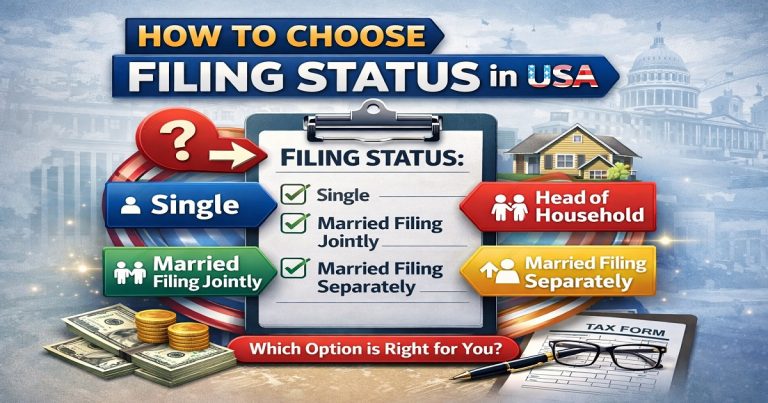
Filing Status
Capital gains thresholds vary by filing status, such as:
- Single
- Married filing jointly
- Married filing separately
- Head of household
The income amounts listed in this document are applicable for the income year in question, and may vary over time so please refer to the latest applicable tax-year before calculating tax.
Special-Rate Categories
Some gains may be taxed at special rates provided for by federal law, different from the normal long term capital gains rates. Some examples are certain collectibles, qualified small business stock and some real estate related gains.
Current Federal Long-Term Capital Gains Tax Table
Fill in the current table with income thresholds for each filing status and for each tax year, that has been approved by the IRS.
This table should be updated annually with the latest official IRS guidance – IRS thresholds may change from year to year, so SmartTaxGuides should review and update it annually.
Capital Gains Tax Brackets Explained
- The tax brackets for capital gains tax are based on taxable income and filing status and will determine which tax rate may be applied to capital gains. The problem, however, is that many people think that the whole capital gain amount is subject to one single percent as tax.
- The reality is that, Long-Term Capital Gains can combine with various income levels. A part of a gain could be subject to one rate of the tax brackets, and another part to a higher rate, as it all depends on the taxpayer’s taxable income.
- That’s why it’s not always advisable to go by one percentage in calculating capital gains tax.
- Part of a taxpayer’s long-term gain may be subject to one tax rate and the other part to a different tax rate, for example, if a taxpayer’s income falls in two ranges.
- The thresholds are also dependent on your filing status. Common filing statuses are Single, Married Filing Jointly, Married Filing Separately and Head of Household.
- These thresholds are subject to change annually, so it’s important to always reference the IRS-approved Capital Gains Tax Brackets for the year in question to determine the tax liability.
How to Calculate Capital Gains Tax
To calculate the capital gains tax, you first need to identify your gain or loss and then identify how your gain or loss will be treated for federal tax purposes.
1: Determine Proceeds
Use proceeds from the sale of the asset. Some selling costs could impact net realizations.
2: Calculate Adjusted Cost Basis
The adjusted cost basis is normally the purchase price of an asset and can include or exclude certain adjustments based on the kind of asset.
3: Calculate Gain or Loss
Use the basic formula:
Amount realized − adjusted basis = capital gain or loss
If the result is positive, it is likely that you have made a capital gain, if the result is negative it is likely that you have a capital loss.
4: Determine Holding Period
Make sure that you know the duration of the ownership of the asset prior to its sale. This is used to calculate the short-term gain/loss versus the long-term gain/loss.
5: Consider Taxable Income and Filing Status
To determine which federal capital gains rate to use for long-term gains, consider the following factors: taxable income and filing status.
6: Consider Applicable Additional Taxes
Some gains may have other tax provisions or be taxable at a different rate at the federal level, depending on your situation.
The Capital Gains Tax Calculator is a quicker way to estimate your tax if you have a gain, a holding period, and the taxable income and filing status.
Capital Gains Tax Example
The calculation of capital gains taxes may differ due to the type of asset, its holding period, and the adjusted basis, plus other tax rules. The following are simplified examples of how a gain or loss can be calculated prior to specific tax rates.
Stock Example
Suppose you buy stock for $10,000 and later sell it for $15,000.
$15,000 − $10,000 = $5,000 capital gain
The tax treatment of the $5,000 gain will generally depend on how long you held the stock and your overall tax situation.
Home-Sale Example
Assume you purchase a home for $300,000 and later sell it for $400,000. Before considering selling expenses, improvements, or other basis adjustments, the basic difference is:
$400,000 − $300,000 = $100,000 gain
But, there are special federal home-sale exclusion rules that might apply to qualifying homeowners. The real taxable gain may be different from this simple computation though.
Loss-Offset Example
Suppose you realize a $10,000 capital gain on one investment but also realize a $4,000 capital loss on another.
$10,000 gain − $4,000 loss = $6,000 net capital gain
Capital losses can typically offset capital gains, with the final tax result possibly subject to IRS netting and/or deduction rules.
These are just examples of the basic calculation only – each case is unique to the individual taxpayer and actual capital gains tax will be affected by the individual’s circumstances.
Cost Basis and Adjusted Basis
For a stock, the cost basis is usually the price that a person paid for the stock. Generally, for purchased property or investments, it begins with the purchase price of the investment or property and may also contain some of the eligible acquisition costs.
The cost basis adjusted for increases or decreases. Adjustments can be caused by a variety of scenarios, such as improvements, depreciation, fees, distributions and more, depending on the asset.
The reason for basis is that it will directly impact the size of your capital gain or loss:
Amount realized − adjusted basis = capital gain or loss
For example, if an asset is sold for $50,000 and its adjusted basis is $35,000, the basic capital gain is $15,000.
The basis of real estate, inherited property, gifts and some types of investment can be more complicated, so it is important to calculate the correct adjusted basis before figuring out the capital gains tax.
Read our Cost Basis Guide for a detailed explanation of how basis is determined.
Read our Adjusted Cost Basis Guide to understand common basis adjustments and how they can affect your taxable gain.
Capital Losses
A capital loss is a loss that results in a sale or disposition for less than a capital asset’s adjusted basis. The losses can be used to offset the tax on capital gains, as per the rules of the Internal Revenue Service (IRS).
Capital Gains and Losses
A capital gain will be the amount by which an asset is sold for more than its adjusted basis, and a capital loss will be the amount by which an asset is sold for less than its adjusted basis. Generally profit and loss are taken into account when calculating the year’s net capital gain.
Netting Gains and Losses
The balance of capital gains and losses is normally carried forward. The short-term gains and losses are typically consolidated separately from long-term gains and losses and then the overall gain or loss is calculated.
For example, if you have a $12,000 capital gain and a $5,000 capital loss, the loss may reduce the net gain to $7,000, subject to applicable tax rules.
Carryovers
Under IRS rules, some capital losses might be carried forward to future tax years if there’s a higher capital loss than can be applied in the current tax year.
Read our Capital Loss Carryover Guide for more details.
Tax-Loss Harvesting
Tax-loss harvesting is the practice of selling investments at a loss, to offset the capital gains that have already been realized. This strategy is also subject to various rules, including the wash sale rule, that investors might want to be aware of prior to using it.
Read our Tax-Loss Harvesting Guide for a complete explanation.
Capital Gains Tax on Investments
When an investment is sold at a price exceeding its adjusted cost basis, the title holder is subject to the capital gains tax. Treatment will vary depending on the type of investment, length of time held, and the individual’s circumstances.
Stocks
A capital gain is typically the result of selling shares at a price that exceeds the shares’ adjusted basis. The gain will be classified as a short-term or long-term gain depending on the time period of the shares’ holding.
ETFs
Capital gains or losses can also be generated when selling shares of ETFs. Some ETFs also may pay investors with a taxable distribution.
Mutual Funds
Mutual fund investors could face tax liability on any increase in value of mutual fund shares that they may receive in the future, even if they do not sell their mutual fund shares, but rather they receive a capital gain distribution from the fund.
Bonds
Capital gain/loss may be realized on the sale of some bonds before they mature. Other tax provisions relating to bonds might also apply individually.
Stock Compensation
Equity compensation, which may include stock options, restricted stock units and more, may include ordinary income and capital gains tax considerations depending on the type of equity compensation and sale of the stock.
Cryptocurrency Capital Gains
The transactions of cryptocurrencies may also generate capital gains or capital losses. Regular sales and exchanges of cryptocurrency, trades involving digital assets, and some transactions using crypto could generate a taxable event.
The net gain or loss is typically based on the difference between the amount realized and the asset’s adjusted basis.
Read our Crypto Capital Gains Tax Guide for detailed rules, examples, cost-basis methods, and reporting considerations.
Capital Gains Tax on Real Estate
Capital gains are a result of real estate sales when the amount realized is greater than assets’ adjusted basis. The tax treatment varies according to type of property and IRS rules.
Selling Your Primary Home
When you sell your home, the proceeds may be considered a capital gain, but qualifying homeowners could be eligible for a federal home-sale exclusion.
Rental Property
Capital gains and other tax factors such as depreciation claimed, are factors that should be considered when selling rental property.
Investment Property
The gains from investment properties are typically calculated based on the selling price, the adjusted basis of the property, the length of time the property was held and other tax provisions.
Second Homes
Second homes are not treated like a qualifying primary residence, and may be subject to different capital-gains rules.
Inherited and Gifted Property
Special basis rules may apply to inherited and gifted property that may impact the amount of taxable gain on the property when it is eventually sold.
How Capital Gains Are Reported to the IRS
Form 1099-B
The Form 1099-B is a tax document that often is prepared by brokerages to report securities sales and other information.
Form 8949
The Form 8949 typically is used to report individual transactions and adjustments in capital assets.
Schedule D
Summary of capital gain and losses that are reported on the taxpayer’s federal return is contained in Schedule D.
When Do You Pay Capital Gains Tax?
The general rule is that capital gains are only recognized when there has been a gain, in the form of a taxable sale or disposition. In the event of a loss, it is reported on the proper federal tax return; if there is a gain, it is reported on the federal tax return for the year of sale.
For larger and/or earlier gains, taxpayers may also have to pay estimated taxes for the year instead of the annual filing deadline.
Federal vs. State Capital Gains Tax
There may be federal and state tax rules that apply to capital gains.
Separate state treatment is provided.
Strategies That May Reduce Capital Gains Tax
Common approaches can include:
- Holding eligible assets long enough to qualify for long-term treatment
- Using capital losses to offset realized gains
- Considering tax-loss harvesting
- Timing asset sales carefully
- Using available tax-advantaged accounts where appropriate
- Reviewing basis carefully so eligible adjustments are not missed
- Using applicable exclusions or deferral provisions when legally available
The right strategy depends on the asset, income level, holding period, and individual tax situation.
Frequently Asked Questions (FAQs)
How much is capital gains tax?
The amount will vary depending on the type of gain (short-term or long-term), your taxable income, your filing status, type of asset, and other federal or state tax provisions.
When is capital gains tax due?
Capital gains usually are reported on the federal tax return in the year in which the gain occurs. There could be estimated-tax payment implications if there are significant gains.
What is considered long-term?
The general definition of a capital gain is holding the asset for more than one year before it’s sold or disposed of.
Are capital gains considered income?
Capital gains are part of tax calculation in the Federal Tax System, and may qualify for different tax rates than regular income if the gains are considered long term.
Do I pay capital gains tax if I reinvest?
It is not a given that the proceeds of a sale will be reinvested without the capital gains tax going away. Under certain tax provisions, there may not be a taxable gain if an asset is sold, even if the sale of the asset represents a gain.
How are stock gains taxed?
Results from selling stocks may be short-term or long-term results. The federal tax rate may also vary based on your taxable income and filing status.
Can capital losses offset gains?
Yes.
Is real-estate capital gains tax different?
It can be. There can be specific guidelines associated with home sale exclusion, adjusted basis, depreciation and investment or rental property.