IRS Letter 1058 Deadline: What to Do Before the 30 Days Expire
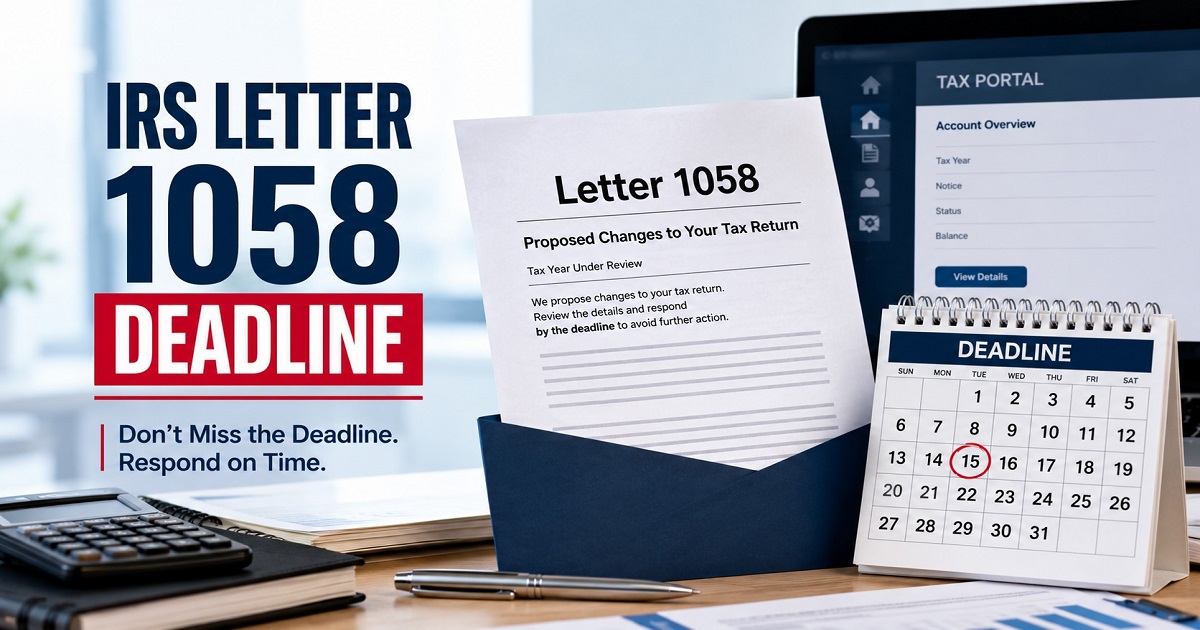
IRS Letter 1058 (or LT11) will give you 30 days to respond before the IRS can initiate collection activity such as wage garnishment or bank levy. Deadline is on the letter but 30 days from the date printed on the letter.
Important Key Details & Deadlines
- Countdown: Count the last 30 days from the date on the notice, in the upper right corner.
- Action Required: If you don’t pay the tax in full, establish a payment plan or appeal this date, you may be liable for additional penalties and interest.
- Collection Due Process (CDP) Hearing: The letter will include a right to formal appeal. This request is done by completing IRS Form 12153 within 30 days. This provides you with legal halt to IRS collection activities while your case is being reviewed.
- Missed Deadline: If a missed deadline, an Equivalent Hearing may be requested within 1 year of the missed deadline, but the right to appeal the decision to the U.S. Tax Court will be waived!
IRS Letter 1058 Deadline: What to Do Before the 30 Days Expire
According to Advocate Shahid (Tax Research and Advisory Specialist). If you have been receiving a letter from the IRS, Letter 1058, do not assume that it is a standard reminder about taxes. This notice, which is frequently related to LT11, is generally referred to as a Final Notice of Intent to Levy and Notice of Your Right to a Hearing. To put it simply, the IRS is saying that if the tax debt is not dealt with, the IRS may take compelled collection action.
First and foremost is the IRS Letter 1058 deadline. In most instances, a Collection Due Process hearing can be requested within 30 days of when you receive the notice in writing on Form 12153. This is why it’s important to pay attention to the IRS Letter 1058 response deadline. Otherwise, you might forfeit important appeal rights and the IRS might get closer to a bank levy, wage garnishment or other collection option.
How to Respond to IRS Letter 1058 (Step-by-Step Guide)
1: Read the Notice Carefully
2: Confirm Whether You Agree With the Balance
Check the notice against your IRS account transcript, tax returns, payment records, penalty & interest history, and amended return/pending adjustment. Some taxpayers may receive IRS letter 1058 for a tax that they do not owe, or it may be that the IRS Letter 1058 wrong amount is mentioned.
If paid, collect bank statements, cancelled checks, IRS confirmation numbers or receipts for payments. Tax Planning & Deductions resources can help avoid problems down the road for continuing tax planning and recordkeeping.
3: Decide Whether to Request a Collection Due Process Hearing
A Collection Due Process hearing is an opportunity to discuss collection alternatives and/or potential collection errors or hardship with the IRS Appeals. The IRS Letter 1058 CDP hearing process can be beneficial as it can provide you with an opportunity to object to the proposed levy and get a formal chance to present your case.
4: File Form 12153 Before the Deadline
The primary form that will be used to request a Collection Due Process or Equivalent Hearing is IRS Form 12153. If you need information on how to file a 12153 IRS letter 1058, read the instructions provided with the notice and return the form to the address provided in the notice to request a hearing.
Never forget to fill out, sign and return the IRS Letter 1058 Form 12153 instructions with a copy of the notice. In case you are unsure about how to fill 12153 form with the Letter 1058, then you may seek expert assistance prior to the deadline.
5: Choose a Resolution Option
Your answer should contain a realistic solution. They can either pay the bill, ask for a short-term extension, an installment agreement, an offer in compromise, currently not collectible status, penalty abatement, or dispute the tax, if legally allowed, or release the levy, if one has already been filed.
These are a few of the typical IRS debt relief options and collection alternatives. This depends on your income, your assets, your expenses, your tax status and your ability to pay the monthly amount.
What Is IRS Letter 1058?
IRS Letter 1058 Meaning in Simple Terms
IRS Letter 1058 is a serious IRS collection letter. If you are wondering, “what is IRS Letter 1058?” then the answer is this—it is a final warning from the IRS that it plans to seize your property or your right to property if your unpaid taxes are not taken care of.
The IRS Letter 1058 meaning is not like a simple balance due notice. A due notice from IRS in normal circumstances will require payment. In Letter 1058, the IRS collection process is up to a more critical level. It notifies you that you can ask for a hearing before any action is taken on the levy.
Why the IRS Sends Letter 1058
The IRS might send Letter 1058 due to unpaid income taxes, unpaid payroll taxes, failure to respond to previous IRS letters, installation agreement default or a case being assigned to a Revenue Officer. This type of notice is usually sent to small business owners, freelancers and self-employed taxpayers who are behind on tax returns and/or tax payments.
For instance, a freelancer might be indebted for two years of taxes, haven’t made estimated tax payments, and never responded to several previous letters from the IRS. At some time later, the IRS could send a Letter 1058 warning that forced collection will commence. Self-employment tax issues may have some useful resources under Freelancer Taxes to help you understand why the balance they have built up in the first place.
What Is the IRS Letter 1058 Deadline?
The 30-Day Response Period
Typically the 30 day period in the IRS Letter 1058 is the most time-sensitive aspect of the notice. The IRS Letter 1058 final notice deadline is generally also related to your right to request an IRS Collection Due Process hearing. This is sometimes referred to as the “IRS Letter 1058 CDP deadline” or the “IRS Letter 1058 appeal deadline.
A CDP hearing is an opportunity to discuss the proposed levy and any collection alternatives with IRS Appeals. Don’t wait, if you wish to preserve your appeal rights. Look closely at the information on the notice about how to proceed if you wish to request a hearing, and the date of the hearing.
Is the Deadline Based on the Notice Date or the Date Received?
When it comes to IRS Letter 1058, Californians may find themselves in a state of confusion. Some question: IRS Letter 1058 deadline – notice date or receipt date? It’s best to play it safe and follow the due date on the notice, and provide a response as early as possible.
Don’t assume that you have an extension because you found the letter late, you just moved, or it is part of a stack of undone letters. IRS Letter 1058 deadline confusion can cause big issues, particularly if a bank levy or wage levy is a possibility.
What If the Deadline Falls on a Weekend or Holiday?
When the IRS Letter 1058 deadline occurs on a weekend or holiday, don’t take chances. Read the notice directions, IRS policies and mailing procedures. The sensible thing to do is to mail your reply before the last day and retain a copy of the mail or proof of delivery.
When responding an IRS Letter 1058, it should always include a copy of the notice, Form 12153 (in case a hearing is requested), signature, correct IRS address, and proof of mailing.
What Happens If You Ignore IRS Letter 1058?
The IRS May Move Toward a Tax Levy
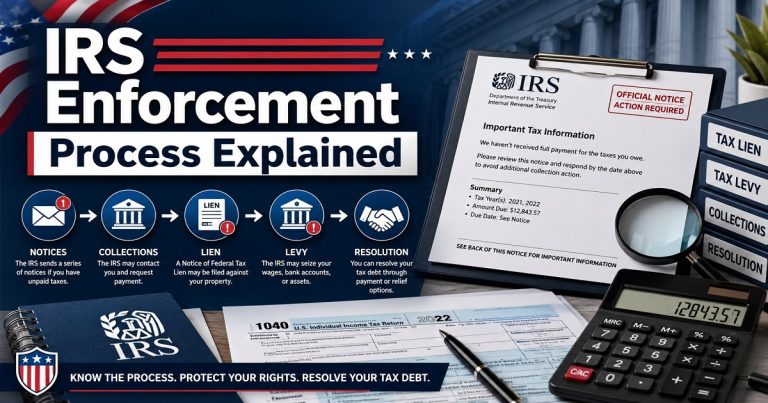
There is a risk if you are wondering what happens if I ignore IRS Letter 1058? The IRS could begin to move towards an IRS bank levy, IRS wage garnishment, levy on certain federal payments or in severe cases, IRS seizure action. Continued penalties and interest could add to the amount.
Typically, the term “can the IRS levy after Letter 1058” is used by taxpayers with concern that the IRS may levy on their bank account or paycheck. Letter 1058 is a part of IRS enforcement process, therefore, it is not prudent to ignore it.
The consequences might be even greater if the notice is for payroll taxes or business tax debt. Business owners should engage in some research on Small Business Taxes, and consult with a tax expert before the IRS collection action moves into full gear.
Real-Life Situation: Bank Account Levy Fear
Let’s say a taxpayer receives a Letter 1058 from the IRS, but he or she can’t pay the entire amount. They don’t say anything and they wait. Once the deadline passes, the IRS might have more time to take action with levy action. What is more appropriate is to ask for a hearing, an installment arrangement or a declaration of financial hardship before the expiration of the time period.
What If You Missed the IRS Letter 1058 Deadline?
You May Still Have Options
When a deadline for the IRS Letter 1058 is missed, it may reduce the rights that are available, but it doesn’t always rule out a way forward. Sometimes, an Equivalent Hearing can be requested in the event of the late submission of Form 12153. An Equivalent Hearing, however, does not duplicate the rights which are granted in a timely CDP request with respect to the Tax Court.
IRS Letter 1058 missed deadline help, IRS Letter 1058 late response and what happens if Form 12153 is filed late are just some of the searches that taxpayers look up due to the need for quick action. It is a matter of timing at this stage.
What to Do Immediately After Missing the Deadline
Call the Internal Revenue Service (IRS) or the assigned Revenue Officer and ask if it had been issued a levy and if an Equivalent Hearing is available if the deadline has passed. Also, develop a payment plan, hardship request or settlement proposal.
An IRS Attorney or competent tax resolution expert can help you take action without unnecessary delays and prevent unnecessary errors if you require IRS Letter 1058 urgent assistance or immediate IRS levy assistance. That’s where resources under Tax Relief & IRS Solutions can help to complete the resolution technique.
Can You Stop an IRS Levy After Receiving Letter 1058?
How a Timely Appeal May Help
Yes – in many cases you can take action after receiving Letter 1058. Timely request for CDP hearing may be useful for a certain pause or a prevention of the enforced collection during the Appeal case.
The words can I stop a levy are often a search term used by taxpayers following the receipt of IRS Letter 1058, deadline to stop IRS levy, request a hearing before IRS levy, levy prevention, and IRS collection hold. All these searches are leading to the same conclusion — safeguarding wages, bank accounts and property before the IRS moves in.
How Payment Plans and Hardship Status May Help
If you are able to pay the IRS each month, then an IRS Letter 1058 payment plan option may be right for you. If it would be a hardship to pay, then currently not collectible status could be beneficial. For certain taxpayers who meet certain income, asset and ability to pay criteria, an offer in compromise could be the solution.
Don’t ignore the notice if you can’t pay. IRS Letter 1058 cannot pay scenarios are not unusual, and the IRS typically desires to see monetary data and a clear suggestion.
Documents You May Need to Respond to IRS Letter 1058
Basic Documents
If you are asking what documents are needed for IRS Letter 1058, start with these:
- A copy of IRS Letter 1058 or LT11
- Form 12153
- Prior tax returns
- IRS account transcript
- Proof of payments
- Bank statements
- Pay stubs
- Business income records
- Expense records
- Prior IRS agreement letters
- Form 2848 if using a representative
Form 2848 allows a tax professional to represent you before the IRS.
Financial Disclosure Documents
The IRS may ask for financial disclosure for payment plans, hardship or settlement options. These are typically in the form of IRS Form 433-A, IRS Form 433-F or Form 433-B for businesses. These forms will help to demonstrate income, assets, debts, and monthly expenses.
If a levy would keep you from paying your rent, utilities, food, medical bills or other expenses, then good IRS hardship documentation can be important.
Fees, Penalties, and Costs to Expect
IRS Penalties and Interest
The penalty and interest will then keep accruing until the tax debt is repaid or settled. This is because the delay can increase the balance. In some cases, penalties may be deemed as too steep, and a penalty abatement request might be warranted.
Payment Plan Costs
Depending on how and why you are applying for an IRS installment agreement, there may be a setup fee. Don’t assume anything when it comes to fees; always check the latest IRS payment plan page.
Professional Help Costs
There are different fees for IRS Letter 1058 consultations and representation. Tax attorneys for IRS final notice cases may quote on various factors such as tax year(s) involved, tax liability, if tax levy has already occurred, if financials are required, and if Appeals representation is required.
Common IRS Letter 1058 Mistakes to Avoid
The worst error is to not pay attention to the notice due to the lack of funds. IRS Letter 1058 no money to pay doesn’t imply you have no choices.
Other errors involve submitting your Form 12153 to the wrong address, not having a plan for contacting the IRS, waiting until the last day, assuming that you have a payment plan, or not retaining your proof of mailing. Problems also occur when IRS Letter 1058 is redirected to an outdated address or when the taxpayer states that IRS Letter 1058 went missing in the mail, when it was already past the due date.
If you were given a final notice, check out some of the IRS Notices & Problems resources and take action before the IRS Letter 1058 deadline passes becomes the main problem.
Common IRS Letter 1058 Problems and Solutions
Problem: The Tax Balance Is Wrong
Check Transcripts, Amended Returns and Tax Records. If the balance is incorrect, query this in your hearing request, if it’s permitted.
You Already Paid the Tax
Obtain evidence such as bank statements, cancelled checks, IRS payment forms and letters.
You Never Received Earlier Notices
Determine if IRS used your last known address. Check the account transcript to determine the notice history as well.
Your Bank Account Was Frozen
If you are receiving a letter from the IRS stating bank account frozen, take action quickly. Reach out to IRS and apply for release of levy (if there is one) and evidence of hardship (as needed).
The IRS Is Threatening Wage Garnishment
If IRS Letter 1058 wage garnishment help is required, be sure to request a hearing, if it’s still in time, proposes a payment plan, or request hardship status if the levy would prohibit basic living expenses. This is also the best way to safeguard my bank account from IRS levy and further collection damage.
Legal References Behind IRS Letter 1058
The IRS levy legal requirements are based on the rules of the IRS levy notice. The IRS can place a levy pursuant to IRC Section 6331, but in general is required to provide notice before making a levy. In many cases of levy, IRC Section 6330 affords Collection Due Process rights.
If you disagree with Appeals’ determination, you may want to file a timely CDP request to preserve the right to petition the U.S. Tax Court. This is why Letter 1058 isn’t simply a reminder of payment. It is a legal collection notice containing deadline-sensitive taxpayer appeal rights, IRS due process rights and is appealable against IRS levy action.
Should You Call the IRS or File an Appeal?
If you’re able to pay all of the debt at once, a short-term payback schedule is necessary, or you just need the IRS to clarify your account—calling the IRS might be all you need. If you disagree with the balance, wish to have the case reviewed by Appeals, require time to submit collection alternatives, or wish to maintain formal appeal rights, though, you might want to file Form 12153 and if in doubt, use a copy of an IRS Notice Deadlines Guide as a reference to keep track of deadlines and consult an appropriate tax professional before the deadline to respond.
Do You Need a Tax Attorney for IRS Letter 1058?
Don’t necessarily need a tax attorney for all Letter 1058 matters.
Official IRS Portal and Contact Guidance
The IRS has issued guidance and has a webpage dedicated to the official contact information for the IRS.
Mail Form 12153 to the address listed on Letter 1058 or the notice of the levy. Maintain record of mailing. To verify your account, use the IRS Online Account, or request an IRS account transcript or call the phone number provided on the notice or contact the assigned Revenue Officer, if provided.
In extreme cases, the Taxpayer Advocate Service can assist taxpayers facing hardship or who are unable to work out their concerns with the IRS.
Do not relay any sensitive tax information to any unverified site or person stating that they are the IRS. Check the notice, phone number and mailing address using official IRS sources.
Summary: What to Do Before the IRS Letter 1058 Deadline
Read the IRS Letter 1058 date of notice and the deadline, verify the tax years and balance due, determine if you agree, request a hearing using IRS Form 12153, request a payment plan or a hardship status if not able to pay and retain copies of all correspondence.
The main points of a good IRS Letter 1058 deadline checklist will be speed, accuracy and documentation. The appropriate IRS Letter 1058 reply choices can keep stoppable levy action at bay.
FAQs
What is the IRS Letter 1058 deadline?
Please observe the exact date specified on your notice.
How many days do I have to respond to IRS Letter 1058?</h3>
For many, taxpayers will have 30 days to request a CDP hearing on Form 12153. Send the form in good time and ensure that proof is kept.
What happens if I miss the IRS Letter 1058 deadline?
While some important CDP appeal rights may be lost, there may be other options available like an Equivalent Hearing, payment plan or hardship request.
Can the IRS levy my bank account after Letter 1058?
Yes.
Can IRS Letter 1058 lead to wage garnishment?
Yes. If the matter still doesn’t get resolved, the IRS can levy wages, bank accounts or some other property.
What form do I file for IRS Letter 1058?
Form 12153 is most often used to request a Collection Due Process (CDP) or Equivalent Hearing.
Can I get a payment plan after IRS Letter 1058?
Yes, there are still some taxpayers who can ask for an installment agreement, but it will only be approved if it is complied with, the facts are correct and IRS rules are followed.
Do I need a tax attorney for IRS Letter 1058?
Not always.
Conclusion
IRS Letter 1058 is no joke, since it is related to a potential levy and deadline for appeal. Taking any action before the end of the response period is the most critical action. Read the notice, confirm the balance, if necessary, complete Form 12153 and select a reasonable tax resolution option.