Tax Relief & IRS Solutions: Help With IRS Debt, Notices, Penalties, and Payment Plans
As noted by Advocate Shahid (Tax Legal Research Specialist). Tax Relief & IRS Solutions provides assistance to taxpayers for IRS tax debt and tax back, IRS Notices, Penalties, interest, payment plans, IRS liens, levies, wage garnishment and unfiled tax returns. The best IRS debt settlement solution for you is dependent on your debt, income level, assets, filing record and the type of IRS action that has already been taken if you owe any money or have been served an IRS notice.
IRS Tax Relief Process (Step-by-Step Guide)
1: Review the IRS Notice or Tax Balance
Start with the notice. Check:
- Notice number
- Tax year
- Balance due
- Response deadline
- Proposed changes
- Penalties and interest
- Appeal rights
2: Check Filing Compliance
When requesting IRS relief, be sure all necessary returns have been submitted. Some tax relief services are either delayed or de-barred due to the absence of returns.
This is particularly true for small business owners, freelancers and self-employed taxpayers. Guides on Freelancer Taxes, Small Business Taxes can assist people who require to know why they have actually incurred tax debt in the first place.
3: Review Income, Expenses, Assets, and Debt
The IRS also may consider your financial situation when deciding if you qualify for hardship status, an Offer in Compromise or a type of payment. Be prepared to provide income, required expenses, bank statements, assets and liabilities.
4: Choose the Right IRS Solution
Choose the solution based on your real situation:
- Payment plan if you can pay over time
- Offer in Compromise if you cannot pay in full and qualify
- Penalty relief if you had a valid reason
- Currently Not Collectible status if you cannot afford basic living costs
- Appeal if the IRS action is wrong or disputed
5: Submit Forms and Supporting Documents
Common forms include:
- Form 9465 for installment agreement
- Form 656 for Offer in Compromise
- Form 433-A for individual financial details
- Form 433-B for business financial details
- Form 433-F for collection information
- Form 843 for penalty abatement or refund request
6: Track the IRS Response
Have copies of all documents. Track deadlines. Keep receipts or confirmation of mailings on line. Be quick to respond when the IRS requests additional information.
What Is Tax Relief & IRS Solutions?
Simple Meaning of Tax Relief
Tax relief involves any IRS-approved method that can be employed to manage, lower, delay, contest or settle a federal tax issue(s). It doesn’t necessarily mean that the IRS will clear all your tax debt. Tax relief in many instances is only a method to a better and a cheap method to handle the tax obligation.
For instance, if you can’t afford to pay the tax debt in full, then you might be eligible for an IRS installment agreement. When IRS notices of tax debt are issued and the debt amount is incorrect, you might be in need of IRS notice assistance or IRS tax dispute resolution. If you were unable to meet a deadline due to serious illness, death in the family or another acceptable reason, you can ask for IRS penalty relief.
What IRS Solutions Usually Include
Tax Relief & IRS Solutions may include:
- IRS payment plans
- IRS installment agreements
- Offer in Compromise
- IRS penalty abatement
- First time penalty abatement
- Reasonable cause penalty relief
- Currently Not Collectible status
- Tax lien help
- Tax levy help
- Wage garnishment help
- Bank levy release
- IRS audit help
- Audit reconsideration request
- Filing missing tax returns
- IRS notice response
- Tax compliance review
When Do You Need IRS Tax Help?
You Owe the IRS and Cannot Pay
- Set up an IRS payment plan
- Request a short-term payment plan
- Apply for a long-term payment plan
- Review Offer in Compromise eligibility
- Request penalty relief
- Ask for IRS financial hardship status
- Get back into tax compliance by filing missing returns
You Received an IRS Notice
Common IRS notices include CP14, CP2000, CP504, Letter 1058, LT11, 4883C, and 5071C. There are some notices that are straightforward. Others are serious. In some cases, a CP2000 notice response will need to include documentation of income, deductions, and/or corrected records. CP504 may be issued as a final notice which advises of potential levy action. Letter 1058 or LT11 could be a final notice of intent to levy (with appeal rights).
IRS Collection Action Has Started
You need urgent IRS tax help if collection action has already started. Warning signs include:
- The IRS filed a tax lien
- The IRS sent a final notice before levy
- The IRS started wage garnishment
- The IRS froze or levied a bank account
- The IRS rejected your payment plan
- The IRS denied your Offer in Compromise
- The IRS took your tax refund for old debt
Common IRS Problems Tax Relief Services Can Help Resolve
Back Taxes and Unpaid Tax Debt
Back taxes are taxes that have not been paid that are from previous years. They can include tax debt for individuals, self-employed tax debt, business tax debt, payroll tax issues or federal tax debt from previous tax returns.
Help for the taxes that are not paid is typically first aid, beginning with these three questions:
- Have all required tax returns been filed?
- Is the IRS balance correct?
- What can the taxpayer afford to pay?
When returns aren’t filed, you might need to resolve unfiled tax returns prior to asking for a lot of IRS tax settlement options.
IRS Penalties and Interest
Tax balances have a tendency to mount up rapidly when IRS penalty and interest are added on. Failure-to-file penalties, failure-to-pay penalties, estimated tax penalties and penalties for payroll tax deposits are some of the common penalties.
There may be some situations where taxpayers are eligible to get IRS penalties lifted, either by first time penalty abatement or reasonable cause penalty relief. There are others who will have to write the penalty abatement letter or submit IRS form 843.
IRS Notices and Letters
Not all IRS letters are the same. If a CP14 balance due notice is received it is likely that the IRS is assuming that you are liable for unpaid tax. Typically, a CP2000 income mismatch notice indicates that income that was reported to the IRS is not reflected on the tax return. The CP504 notice may be a significant collection notice. Final levy rights and IRS appeals options can be in the form of Letter 1058 or LT11.
When an identity is not verified, a letter from the IRS (4883C or 5071C) will usually demand that the taxpayer confirm his identity before the IRS will accept the return or refund.
Tax Liens, Levies, and Wage Garnishment
A tax lien is the legal claim of the government against your property due to unpaid taxes. It’s not a levy. A tax, or seizure of property or money. Wage Garnishment involves IRS withholding a portion of your wages. A bank levy will block your funds from your bank account.
Tax lien assistance, tax levy assistance, wage garnishment help and bank levy release are pressing issues of tax problem resolution. Time is critical after enforcing.
Unfiled Tax Returns
It’s not until taxpayers have filed missing returns that they can take advantage of the best IRS debt relief options. The IRS may not grant certain payment plans, hardship requests or other settlement options if you do not have tax returns filed.
Quick IRS Notice Guide: What Your Letter May Mean
| IRS Notice | Common Reason | Typical Action Needed | Urgency |
|---|---|---|---|
| CP14 | Balance due | Pay, dispute, or request payment plan | High |
| CP2000 | Income mismatch | Agree, disagree, or send proof | Very High |
| CP504 | Final notice before levy | Respond quickly | Very High |
| Letter 1058 / LT11 | Final intent to levy | Appeal or resolve | Critical |
| 4883C / 5071C | Identity verification | Verify identity | High |
CP14 Notice
Typically, a CP2000 notice will be an IRS underreported income notice or an IRS missing income notice. This could include income from your W-2, income from 1099, income from selling stocks, income from cryptocurrencies or self-employment income. Not every audit is a traditional audit, but there is always a response that needs to be made.
CP504 Notice
A CP504 final notice is not to be taken lightly. Generally, it implies that the IRS is trying to alert you to collection action. Please do not delay contacting the school if you get this letter.
Letter 1058 or LT11
Collection due process hearing rights may be included in Letter 1058 final intent, LT1 notice. Often these letters must be acted upon in a timely fashion as deadlines for appeals may be short.
4883C or 5071C
These is typically letters that pertain to identities. The IRS might require identification verification of you, possibly by means of the official IRS procedure, before the IRS processes your return.
Tax Relief Options Available to Taxpayers
IRS Payment Plan or Installment Agreement
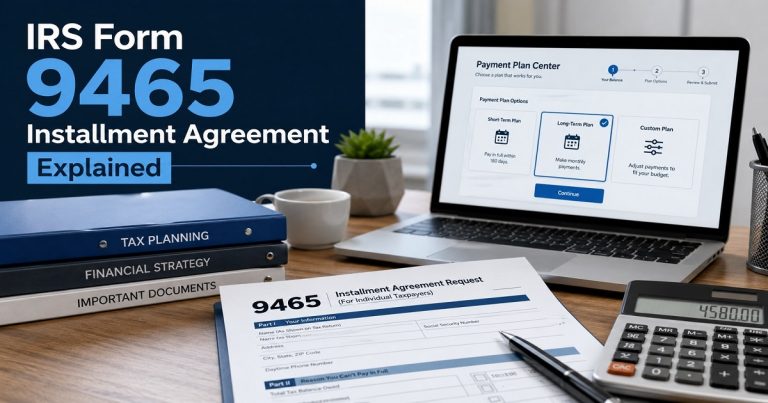
An IRS payment plan (also referred to as an IRS installment agreement) is the most suitable compromise when paying in installments. An IRS online payment agreement tool is available if you qualify.
Payment plans can be in the form of a short term payment plan or a long term payment plan. IRS Form 9465 is used by some tax payers to request an installment agreement.
Offer in Compromise
If a taxpayer wants to reduce IRS debt for less than the balance, an Offer in Compromise may be an option for them. This also is known as OIC tax relief or IRS tax settlement.
Not all are eligible, though. IRS considers all financial information, including income, expenses, assets, equity, future earning potential and financial condition. Typically, IRS Form 656 and financial disclosure forms are completed on their applications.
Penalty Relief
If you qualify for IRS penalty relief, you can reduce your IRS penalties. Typically, the most common first time or reasonable cause penalty abatement relief options are offered.
When the failure was due to circumstances which are outside of one’s control, reasonable cause may be used. This can be anything from serious illness, death in the family, fire, natural disaster or anything else that has been documented as a hardship.
Currently Not Collectible Status
For now, the taxpayer might not have enough income to cover their living costs and may not be able to afford payments, and be deemed currently not collectible. This will not cancel out the tax liability. It can temporarily halt IRS collections until there has been a change in financial circumstances.
The IRS might ask a financial hardship review, bank statements, income proof and collection information statement details.
Audit Reconsideration
This could benefit those who have been audited by the IRS and had their tax assessed, but who did not have an opportunity to appeal the audit or had forgotten to do so, and who have since discovered new information. This can be the case if you think you don’t owe as much as the IRS.
Required Documents for Tax Relief & IRS Solutions
Basic Tax Documents
You may need:
- IRS notices and letters
- Prior tax returns
- W-2s
- 1099s
- Business income records
- Payroll tax records
- Bank statements
- Proof of estimated tax payments
Financial Documents
You may also need:
- Pay stubs
- Profit and loss statement
- Mortgage or rent proof
- Utility bills
- Medical bills
- Loan statements
- Vehicle payment proof
- Insurance bills
- Bank account balances
- Asset details
Hardship or Penalty Relief Documents
For hardship or reasonable cause, useful documents may include:
- Medical records
- Death certificate
- Disaster proof
- Job loss proof
- Divorce documents
- Theft or casualty loss proof
- Proof of incorrect IRS information
IRS Fees, Penalties, and Expected Costs
IRS Penalties and Interest
Penalties and interest will not be abated until the tax balance is settled. That’s why it is important to move swiftly.
IRS Payment Plan Fees
Different plans might include a setup fee with the IRS; it may depend on your plan type and application. It’s more effective to fill online applications than to send paper or make phone applications.
Offer in Compromise Costs
Taxpayers may be required to pay an application fee and first payment when they apply for an offer in compromise, except when they meet the minimum income requirements. Also, depending on the rules in effect at the time, the IRS might withhold the refunds pending or accepted offers.
Professional Tax Help Costs
Tax relief attorney, CPA, or enrolled agent fees vary. Cost depends on:
- Number of tax years involved
- Whether returns are unfiled
- IRS collection stage
- Size of tax debt
- Whether appeals are needed
- Whether business tax or payroll tax is involved
A case that just requires IRS payment assistance is more affordable than a tax court case, payroll tax case, IRS levy case, or a case for a more in-depth tax dispute resolution.
Common IRS Errors and How to Fix Them
IRS Says You Owe Money but You Disagree
If you believe that you aren’t liable for any taxes, and IRS tells you otherwise, do not ignore the notice. Match up the IRS notice with your records. Review business records, prior returns, W-2s, 1099s and transcripts.
Submit proof prior to deadline.
CP2000 Income Mismatch
Very often the income mismatch with the IRS occurs when income reported on the tax return doesn’t match the CP2000. This could include 1099-NEC income, 1099-MISC income, 1099-K income, stock sales income, crypto income or self-employment income.
IRS Added Penalties After Late Filing
If you file your tax return late, you may be charged with added penalties by the IRS.
If the IRS added late filing penalty or IRS added late payment penalty, check if you qualify for the first time penalty abatement and/or for reasonable cause relief from the IRS.
IRS Rejected Your Payment Plan
For a variety of reasons, an IRS payment plan denied result may occur: Returns may be missing, there may have been a prior default, financial information may be incorrect, the balances are high, payroll tax issues may have arisen, or it may be that the IRS has proposed a payment plan that is too low.
IRS Took Money From Your Bank Account
IRS levy on bank account is imperative. An immediate IRS contact may be required, a bank levy release, a hardship status declaration or professional representation may be necessary.
Common Mistakes to Avoid
Ignoring IRS Notices
The IRS notice issues that are not dealt with, grow larger. Loss of appeal rights, increased penalties and increased risk of lien and levy action may result.
Applying for the Wrong Relief Program
Offer in Compromise is not available for all taxpayers. There are times when it is best to enter into an IRS tax payment plan, partial payment installment agreement, IRS tax penalty relief, or IRS Currently Not Collectible.
Sending Incomplete Financial Information
Financial data may be missing and cause a delay in the review process or the outcome could be denied. The IRS filing of financial disclosures needs to be accurate.
Filing an Offer in Compromise Without Compliance
Your offer may be rejected if you don’t have all your tax returns filed or do not have what is required paid. When IRS offer in compromise denied cases, they are almost always due to compliance issues.
Trusting Unrealistic Tax Relief Promises
Take care of companies that guarantee to negate tax debt without considering your facts. Tax relief is a real thing which relies on compliance and the law, income, assets, and expenses.
Smart Tax Guides and Tax Basics & Filling are good for taxpayers to have for broader education so that they aren’t in a rush to get tax help when a problem arises.
Legal and Tax Compliance References
Tax law compliance matters because IRS relief is based on rules, not promises.
Important legal areas include:
- Internal Revenue Code Section 6159 for installment agreements
- Internal Revenue Code Section 7122 for Offer in Compromise
- Internal Revenue Code Section 6651 for failure-to-file and failure-to-pay penalties
- Internal Revenue Code Section 6320 for lien hearing rights
- Internal Revenue Code Section 6330 for levy and collection due process rights
- IRS Publication 1 for taxpayer rights
- IRS Form 9465 for installment agreement requests
- IRS Form 656 for Offer in Compromise
- IRS Form 843 for penalty abatement or refund requests
Official IRS Portals and Contact Guidance
IRS Online Account
An IRS online account allows taxpayers to view the balances, payments, notices, and tax records. This is frequently the first place where you will know the truth about what the IRS will report.
IRS Online Payment Agreement Tool
People who are eligible can request or change a payment plan using the IRS online payment agreement tool. This can be useful to simple tax debt repayment situations.
Offer in Compromise Pre-Qualifier
Before submitting an IRS Offer in Compromise, taxpayers might want to check their eligibility first with the IRS pre-qualifier. It’s a helpful initial screening, but doesn’t promise acceptance.
Taxpayer Advocate Service
The Taxpayer Advocate Service can assist those who are in hardship, experience long delays with the IRS, or have issues with the IRS.
When to Contact a Tax Professional
Contact a tax professional when:
- The IRS issued a final notice
- Wages are being garnished
- A bank levy started
- A tax lien was filed
- Multiple years are unfiled
- Business payroll taxes are involved
- You disagree with the IRS
- You need IRS appeals
- You are considering Offer in Compromise
Tax Lawyer vs CPA vs Enrolled Agent: Who Should You Choose?
When a Tax Lawyer May Be Better
A tax lawyer may be better for IRS appeals, wage tax hassles, complex tax negotiations with the IRS, wage garnishment, tax court problems, tax liens or levies.
When it comes to getting an IRS dispute lawyer, tax controversy attorney or IRS collections attorney, legal experience is crucial.
When a CPA May Be Better
A CPA can be more suitable for preparing taxes, bookkeeping, amended tax returns, business accounting and overall tax compliance.
When an Enrolled Agent May Be Better
An enrolled agent can assist you in representing yourself with the IRS, filing taxes, auditing your taxes, and in numerous tax resolution services.
Best Practical Advice
A CPA or enrolled agent might suffice if you are only having problems filing or calculating your taxes. When the IRS collection process has turned into a serious matter, or a tax law issue or tax appeal is at stake, a tax attorney might be a better option.
Real-Life Examples of IRS Tax Relief Situations
Example 1: Employee With a CP14 Balance Due Notice
Issue: Taxpayer is short of $8,500 and is unable to make the full payment.
Possible solutions: Ask for an IRS payment plan, explore IRS penalty relief.
Example 2: Self-Employed Worker With 1099 Tax Debt
Situation: The taxpayer didn’t make estimated payment(s) and is now liable for tax, penalties and interest.
The probable answer: File all the necessary returns, make a payment plan and review future estimated payments.
Example 3: Small Business With Payroll Tax Problems
Solution: There is a business who did not pay their payroll taxes.
A probable solution is to seek immediate professional attention as a payroll tax case can turn serious in a blink of an eye.
Example 4: Taxpayer With Final Notice Before Levy
Problem: Taxpayer was sent Letter 1058 or LT11.
The most probable answer is to file before the deadline, follow-up for appeal options and obtain tax resolution services.
Example 5: Taxpayer With Medical Hardship
Solution: The taxpayer was unable to file and/or pay due to illness.
Probable Solution: Reasonable cause penalty relief might consider looking at with supporting medical records.
Get Help With Tax Relief & IRS Solutions
Don’t wait until collection action is more severe if you owe the IRS, have received a notice, or you are unable to pay your tax balance. A tax relief professional will take a look at your IRS notice, go over your options, confirm your eligibility for payment plans or penalty relief and guide you to the best course of action to take.
FAQs About Tax Relief & IRS Solutions
What is Tax Relief & IRS Solutions?
Tax Relief & IRS Solutions is IRS legal representation for tax debt, tax notices, tax penalties, tax payment plans, IRS liens, IRS levies and unfiled IRS tax returns. The objective is to solve the issue in the appropriate IRS process.
Who qualifies for IRS tax relief?
The tax balance, income/expenses, assets, filing history and type of relief sought determines who can qualify for a qualification. There are also some taxpayers who are eligible for a payment plan, penalty relief, an Offer in Compromise and/or hardship status.
Can the IRS reduce my tax debt?
If you qualify, the IRS will accept less than the entire offer, an Offer in Compromise. You might not be able to settle if you have any assets or are able to pay in installments.
What should I do if I receive an IRS notice?
Be sure to read the notice carefully. Review the tax year, deadline, proposed changes and instructions for response. Verify with IRS and be responsive on time.
Can IRS penalties be removed?
In some cases, penalties can be removed due to First Time Abate, reasonable cause or statutory exceptions. There is typically a good reason and supporting evidence required.
What is the best IRS solution if I cannot pay?
An IRS payment plan can be considered if it’s possible to pay the debt over time. Currently Not Collectible status or an Offer in Compromise also may be considered if you would not be able to pay the balance.
Do I need a tax lawyer for IRS debt?
If you are facing a tax lien, a levy notice from the IRS, they have begun wage garnishment, denied a request for assistance, or are in need of tax dispute assistance or legal appeals, you may need a tax lawyer.
Can I get tax relief with unfiled tax returns?
In most cases, the IRS does not grant many tax relief options unless the tax returns are filed prior to granting permission. Of course, filing old returns is typically the first step towards being compliant with tax.
Conclusion
IRS tax issues can be stressful but most IRS issues are legal in nature. From back taxes, IRS notices, penalties, payment plans, tax liens, levies, or unfiled returns, the safest way to proceed is to understand the notice, check tax balance, review records and select the IRS solution that is right for you.
Don’t wait for IRS to take more aggressive collection action. The sooner the response, the more choices will be available.