Partnership Taxation Deep Guide: Form 1065, Schedule K-1, IRS Rules, and Penalties
Advocate Shahid (Tax Policy and Advisory Specialist), as mentioned. Partnership Taxation in the US are pass-through organizations, and the business is not taxed on a federal level. The profits and losses are passed through to the partners and reported on their personal tax returns, with the flexibility to structure the partnership to provide non-taxable treatment of profits or losses.
Partnership Taxation Deep Guide
Key Characteristics & Entity Structure
- No Entity Tax:
- General Partnerships (GP)
- Limited Partnerships (LP)
- Limited Liability Company (LLC)
2. Tax Reporting and Filing Requirements
- Form 1065
- Schedule K-1
- Partner Personal Returns
3. Allocation of Profits and Losses
-
- Distributive Share
- Guaranteed Payments
4. Basis Rules and Loss Limitations
-
- Partner’s Basis:
- Loss Deductibility:
5. Self-Employment Tax
-
- General Partners:
- Limited Partners:
-
- Filing Obligations:
- Composite Returns:
This would result in tax liabilities on the partnership income on behalf of the partner(s), even if there are no cash distributions made. Late filing of Form 1065, incorrect Schedule K-1 reporting, missing K-1s, basis issues and IRS partnership penalties are common filing issues. When the problem comes from an IRS notice, IRS audit, a dispute with the IRS about penalties or a partner dispute, it might be advisable to consult a partnership tax accountant or partnership tax attorney.
What Is Partnership Taxation?
Simple Meaning of Partnership Taxation
Partnership taxation is where part of the business reports its financial transactions, but typically the liability for the tax falls on the individual partners. That’s why partnerships are sometimes referred to as “pass through” entities.
For instance, a pair of partners are the proprietors of a consultancy. The partnership gets $200,000 of ordinary business income. Each partner could be liable to report $100,000 on his/her personal return even if he/she receives only fifty percent of the cash.
Many business owners get the knack of this. Income from a partnership is not necessarily considered taxable partnership income. This is because a partner may be liable to tax on a distributive income, even though the funds remain in the business.
Does a Partnership Pay Income Tax?
Partnerships do not pay federal income taxes directly, except in the few special situations where they do. Instead, it will take the place of filing a federal tax return in a partnership and provide each partner with Schedule K-1. Then the partners report their respective income, losses, deductions and credits on their tax or information return.
But a federal income tax, “no federal income tax at the entity level”, does not imply “no tax responsibility.” There may be state tax obligations, withholding tax problems, employment tax issues, local requirements or filing requirements for foreign partners that exist in a partnership. In addition, certain states charge taxes on the entity (or franchise taxes).
How Are Partnerships Taxed in the US?
Partnership Pass-Through Taxation Explained
Pass through taxation is when income and losses of a partnership pass through to the partners. The partnership documents the overall business activity, and distributes each partner’s share based on the partnership agreement and tax laws.
Through the partnership, the following are common items reported:
- Ordinary business income
- Rental partnership income
- Capital gains or losses
- Interest and dividend income
- Charitable contributions
- Section 179 deductions
- Credits
- Guaranteed payments
- Separately stated items
These items aren’t necessarily subject to the same type of taxes. For instance, the nature of ordinary business income and capital gains may be different. There may be some passive activity limitations on rental income. If guaranteed payments are made, this could impact partner self-employment tax.
General Partnership, Limited Partnership, LLP, and Multi-Member LLC Taxation
There are various ways of structuring a business and each can have partnership tax treatment.
- A general partnership typically is a partnership between two or more people who run a business together. Generally, a limited partnership has both general and limited partners. Under state law, there may be liability protection for a Limited Liability Partnership (LLP). A multi-member LLC typically is treated as a partnership for tax purposes, unless it makes an election to the contrary.
- There are several types of real estate partnerships, investment partnerships, family partnerships and professional service partnerships that can file Form 1065; however, each partnership has different tax issues. The focus of a real estate partnership can be depreciation, passive losses and distributions. An investment partnership could be subject to capital gains, dividends and separately stated items of a partnership’s portfolio of investments. A partnership in business that involves professionals may emphasize more on the guaranteed payments and self-employment tax.
Form 1065: The Main Partnership Tax Return
What Is Form 1065?
- The U.S. Return of Partnership Income is a tax form known as Form 1065. It’s the primary IRS joint return. The form provides information on the income, deductions, gains, losses, credits, partner information, balance sheet information, capital accounts and other tax information.
- Form 1065 is not an individual tax return of the partner. It’s an info return. The partnership includes it to report business activity to the IRS and partners report their share on their own returns using Schedule K-1.
- Form 1065 is a complete form that may contain Schedule K, Schedule L, Schedule M-1 or M-3, Schedule M-2 and Schedule K-1 for each and every partner. In addition to the above, there are forms that are relevant for more complex partnerships, such as forms for foreign activity, interest deduction limitations, depreciation, property sales and rental real estate.
Who Must File Form 1065?
The majority of domestic partnerships have to utilize a form referred to as Form 1065. If you have a multi-member LLC, taxed as a partnership, it would be filed in a similar manner. There are also filing requirements for foreign partnerships with U.S. income, U.S. partners and certain U.S. tax connections.
Final partnership tax return & final Schedule K-1s may be required for a final year partnership. Shutting down the business bank account, or stopping the business operations, doesn’t necessarily put the end of tax filing responsibilities.
If a partnership has one of the following:
- Multiple partners or members
- A multi-member LLC tax classification
- U.S. trade or business activity
- Foreign partners
- Rental real estate income
- Investment income
- Partner changes during the year
- A final year of operations
Form 1065 Filing Deadline and Extension
The 1065 form is usually filed on the 15th day of the third month following the close of the tax year for a calendar year partnership. Many partnerships have that date as March 15. If due date is on a legal holiday or Saturday or Sunday, then the due date is moved to the next business day.
Normally, partnerships will be able to get an automatic extension for six months on Form 7004. But an extension provides more time to file the return. Does not solve tax planning issues on the partner level, missing partner info or poor records.
Schedule K-1: What Every Partner Needs to Know
What Is Schedule K-1?
Schedule K-1 Form 1065 lists all of the items of income, deductions, credits, distributions and guaranteed payments for each partner. It’s used by partners to prepare their own or their business’s tax returns.
The types of income included in a K-1 include ordinary business income, rental real estate income, interest, dividends, capital gains, charitable contributions, Section 179 deductions, credits, foreign tax items and partner capital account information.
Schedule K-1 is not to be overlooked by partners. Any income that is reported on the K-1 and reported to the IRS but is not correctly reported on the partner’s income, may result in a partner receiving a notice from the IRS later on.
What If Schedule K-1 Is Wrong?
The wrong K-1 might lead to major tax issues. It can display an incorrect ownership percentage, income share, guaranteed payment, distribution and/or capital account balance.
A helpful method to fix it is:
- Compare the K-1 with the partnership agreement.
- Review ownership percentages and profit and loss allocation terms.
- Check guaranteed payments, distributions, and capital account changes.
- Contact the partnership or tax preparer.
- Request a corrected Schedule K-1.
- Do not simply guess different numbers on your tax return.
- If your reporting position differs from the partnership return, ask a tax professional whether Form 8082 is needed.
What If a Partner Did Not Receive a K-1?
In the event that a partner wasn’t given a K-1, the first measure will be to get in touch with the partnership. Verify the partner’s name, address, email, taxpayer ID and if Form 1065 was filed and if the partner owns the business.
If the deadline to file the individual tax return is imminent, then the partner may need to consider filing an extension for the personal return. The problem of mismatching will occur later without K-1.
A missing K-1 will not only be a slight inconvenience, it will be a nightmare. It can impact the tax filing process, estimated payments, basis tracking and IRS correspondence in the future.
Partner Basis, Capital Accounts, and Loss Limitations
What Is Partner Basis?
One of the most critical areas of partnership tax is “partner basis. It helps to determine if a partner can offset losses, whether distributions are taxable and how gain or loss is measured on a sale of a partnership interest.
Money and property contributed to the partnership generally is the starting point of a partner’s outside basis. It could rise in response to the income allocations and specific liabilities. Can reduce when distributions and loss allocations are made.
The amount of basis does not always equal the amount on the capital account line on Schedule K-1. It is common for people to make this mistake.
Inside Basis vs Outside Basis
The basis of partnership in the partnership assets is interest in the partnership’s basis – inside basis. The outside basis of the partner is the basis of his or her partnership interest.
This difference becomes important when it comes to distributions, buyouts of partners, selling your partnership interests, and when the Section 754 election occurs. There are certain situations where a Section 754 election may be considered to change basis as a result of transfers of partnership interests and/or distributions. It is also possible that Sections 734 or 743 will apply.
Capital Accounts and Tax Basis Capital
Partnership capital account is a record which keeps track of the economic capital invested by each partner in a business. They can be changed as a result of contribution, profit allocation, loss allocation and distributions.
Capital report on tax basis is particularly relevant as it will help the IRS to better understand the economics of the partners and tax allocations.
Negative capital account issues could occur if distributions or losses are made to a partner that result in a negative balance in that partner’s capital account. Negative capital account does not necessarily mean a negative, it should be understood, and backed up with records.
Why Partnership Losses May Be Limited
A partner can have a loss and not be able to deduct the loss in full if they have a partner. Common limits include:
- Basis limitation
- At-risk limitation
- Passive activity limitation
A real estate partnership would report a $60,000 loss to a partner for instance. The basis of the partner’s outside property is just $25,000. All the loss may not be deductible at that time. There may be partial or temporary restrictions or prohibitions.
Guaranteed Payments, Distributions, and Self-Employment Tax
Guaranteed Payments to Partners
The Guaranteed payments are payments to partners for services or capital that are paid, sometimes in lieu of partnership income. They are typically used by a partner who works in the business, and the other(s) who are passive investors.
Guaranteed payments typically are reported on a separate line on the Schedule K-1. They can also impact on tax on partner’s self-employment income.
Many find it easy to mistake guaranteed payments as normal payroll payments. Partners are typically not considered “employees” for federal tax purposes. Reporting needs to be dealt with properly.
Partnership Distributions
Partnership distributions can be in cash, property or marketable securities. Basis is important even if a distribution isn’t taxable on the same year.
When cash distributions are received from a partnership and the partner’s outside basis is less than the amount that was distributed, this could be a taxable gain to the partner. There may be more complicated rules for property distributions in Section 731 and Section 732.
Do Partners Pay Self-Employment Tax?
Self-employment tax is sometimes paid on income from a trade or business by the general partners. Other forms of guaranteed payments are also typically subject to self-employment income tax.
It may be more important to analyze limited partners/LLC members. Self-employment tax can be based on the specifics of a situation, particularly for those who are in LLCs that are taxed as partnerships.
A potential area for professional tax advice is for LLC’s with active members, especially for service businesses, or professional partnerships.
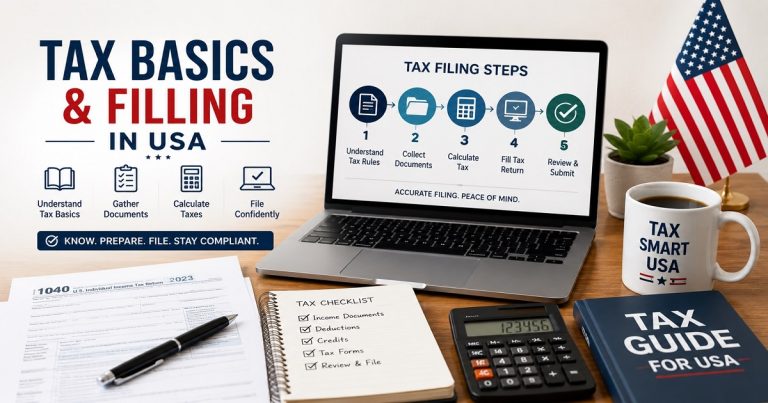
How to File Partnership Taxes (Step-by-Step Guide)
1: Confirm the Partnership’s Tax Classification
Initial step is to verify if the enterprise is registered as a partnership. This can be a general partnership, multi-member LLC, LLP, limited partnership or foreign partnership required to report to the U.S.
Determine if the entity has elected any taxes. The default tax classification of a multi-member LLC is partnership and some LLCs choose to be taxed as a corporation.
2: Gather Required Documents
A proper partnership tax return checklist should include:
- EIN
- Partnership agreement
- Partner names, addresses, and TINs
- Ownership percentages
- Profit and loss allocation terms
- Balance sheet
- Profit and loss statement
- Trial balance
- Bank statements
- Payroll records
- 1099s received and issued
- Prior-year Form 1065
- Prior-year Schedule K-1s
- Fixed asset records
- Loan documents
- Capital contribution records
- Distribution records
- State tax records
- Foreign partner or international activity details, if applicable
3: Prepare Form 1065
Income, deductions, gains, losses and credits should be reported on the Form 1065. It could also contain Schedule K, Schedule L, Schedule M-1 or M-3, Schedule M-2 and partner allocation information.
Ordinary business expenses, rental, professional fees, insurance, depreciation, supplies and other deductible business expenses are common partnership deductions. Records should be attached to each of the deductions.
4: Prepare and Issue Schedule K-1
Each of the partners is required to have a Schedule K-1. It should display the partner’s income share, loss share, the credits, guaranteed payments, distributions and capital account information and other necessary information.
Schedule K-2 and K-3 will also need to be reviewed if the partnership has international items.
5: File Electronically or by Mail Where Allowed
The majority of partnerships will need to file electronically, particularly larger partnerships. If the partnership is located in a different area and/or has different facts, the proper IRS mailing address will vary based on the facts of the partnership and its location.
Penalties may be imposed if the IRS demands e-filing, and the partnership completes its form incorrectly. Maintain a record of e-file confirmations, certified mail or private delivery.
6: Give K-1s to Partners and Keep Records
The partner(s) should receive Schedule K-1s from the partnership and the partnership should maintain copies of the K-1s with the tax records. It should also retain the support for allocations, basis, deductions, distributions, capital accounts and changes in partners.
They could be required for an IRS audit of the partnership, or in the event of a partnership dispute.
Beginning readers might benefit from additional resources on business taxation, such as the “Smart Tax Guides,” “Small Business Taxes,” and “Tax Basics & Filling.”
IRS Partnership Penalties and Notices
Late Form 1065 Penalty
If a partnership files late or does not provide all the information, there is a penalty for late filing on Form 1065. The typical range of penalties is determined by the number of partners and the number of months the returns are late, with a maximum of 300% of the amount of the returns.
Many partnerships are taken aback since they think if there’s no entity level tax, then there’s no penalty. That’s not a fact. Form 1065 is still a required information return.
Schedule K-1 Penalty
The partnership also may be subject to penalties if it doesn’t timely provide Schedule K-1, or if it gives wrong information. The partnership and partners themselves can be impacted by K-1 mistakes.
Knowing that there is a possibility of larger penalties for intentional disregard. If the partnership does not respond to requests to correct errors, even those not intentional, it can result in administrative issues.
IRS Notice for Partnership Return
If the partnership receives an IRS notice, do not ignore it. Follow this process:
- Read the notice date and response deadline.
- Identify the tax year and form involved.
- Compare the notice with filed Form 1065 and Schedule K-1s.
- Check proof of filing, extension, mailing, or e-file acceptance.
- Gather support documents.
- Prepare a clear response.
- Request penalty abatement if eligible.
- Contact a professional if the amount is large or facts are disputed.
For problem areas with penalties, audits, or correspondence, a resource like IRS Notices & Problems or Tax Relief & IRS Solutions might be required.
How to Fix a Late or Incorrect Partnership Tax Return
If Form 1065 Was Filed Late
If the partnership failed to file Form 1065, the missing Form 1065 should be filed as soon as possible. Give missing K-1’s to partners. If you receive a penalty notice from the IRS, check to see if the penalty is appropriate.
If there was some reason to justify late filing by the partnership, and the partners acted in good faith, a reasonable cause letter might be helpful. They could be something that is not ordinary negligence like not being able to get records, the person being very sick, a disaster, etc. Documentation matters.
If Form 1065 Has an Error
So, if there is an error in Form 1065, the way to correct the error is dependent on the partnership and the year. If a partnership returns it could be an amended partnership return. Others might require an Administrative Adjustment Request on the bases of the partnership audit rules.
Schedule K-1s, which have been corrected, might be required as well. Afterwards, partners may have to check to see if they need to amend their own tax returns.
If the Partner Reported the Wrong K-1 Income
A partner reporting the incorrect K-1 should check to see if the personal return agrees with the corrected K-1. If there was an income that has not been reported or has been incorrectly reported, an amended return might be required.
This may also impact your interest, penalties and estimated tax planning. Maintain all correspondence, corrected forms and calculation work papers.
Partnership Audit Rules and IRS Disputes
What Is the Centralized Partnership Audit Regime?
Some of the partnership adjustments can be done on a partnership level through the centralized partnership audit regime. The partnership representative can represent the partnership before the IRS.
This is vital as partners can be impacted by decisions that are taken during the audit process. Each partnership contract should include provisions for the partnership role of a representative.
What Happens During an IRS Partnership Audit?
During a partnership tax audit, the IRS may review:
- Form 1065
- Schedule K-1 allocations
- Partner capital accounts
- Deductions
- Basis records
- Distributions
- Partnership agreement
- Books and records
- Loans and liabilities
- Related-party transactions
When a Partnership Tax Dispute Needs Legal Help
Partner Disputes, IRS Penalty Disputes, Audit Adjustments, Large Balances, Fraud Issues, Foreign Partner Issues, or Litigation Risk are all situations that may warrant the services of a partnership tax attorney.
For most partnerships with no special circumstances, a CPA might suffice for tax preparation. However, having legal counsel is more crucial when legal rights, IRS appeals, penalty defense or conflicts with the partner are involved.
Common Partnership Tax Mistakes to Avoid
Filing Form 1065 Late
Penalties may still apply if the partnership does not have a federal income tax liability and is late filing.
Not Issuing Schedule K-1 on Time
The partners are required to make accurate returns to K-1. Late K-1s can result in partner level filing issue.
Mixing Cash Distributions With Taxable Income
There is a possibility for one partner to incur a tax liability while not receiving any cash. You do not have to accept the cash and it is not the same as taxable income.
Ignoring Partner Basis
Loss deductions, distributions and sale of partnership interests are basis dependent. Failure to report tax in the right basis may lead to incorrect tax reporting.
Reporting Guaranteed Payments Incorrectly
The impact on income reporting and self-employment tax will be from guaranteed payments. To take them lightly is not an option.
Using the Wrong Ownership Percentages
Allocation should be done in accordance to the partnership agreement and tax provisions. Special attention is needed for any change of ownership over the course of the year.
Not Filing a Final Partnership Return
A final Form 1065 and final Schedule K-1s might still be required even if it is a closed partnership.
Ignoring IRS Notices
The IRS might make penalties more difficult to get rid of if they are not paid on time.
Tax Planning & Deductions may be a good topic grouping for planning-oriented readers, particularly for planning for basis and cash flow, and in connection to partnership deductions.
Fees, Costs, and Penalties to Expect
Partnership Tax Preparation Cost
The price of partnership tax return preparation will vary according to the complexity. The service business partnership with just two partners can be far less expensive than a multi-state partnership, investment partnership or partnership with foreign activity.
This can have an impact on costs for:
- Bookkeeping cleanup
- Late filing
- Amended returns
- Corrected K-1s
- State filings
- Partner changes
- Basis calculations
- Audit support
- Penalty abatement requests
IRS Penalties and Interest
Late Form 1065 filing, missing Schedule K-1s, incorrect Schedule K-1s and e-file failures are common penalties that the IRS levies on partnerships. Additionally, if a partner fails to report the income from their K-1 due to missing or incorrect information, they may be subject to interest and/or penalties.
Depending on facts, relief in the event of a penalty can be reasonably caused relief or admin relief. However, there is no automatic relief of penalties. All of those and an explanation should be included with the partnership.
Official IRS Forms, Portals, and Contact Guidance
Important IRS Forms for Partnership Taxation
Important forms and schedules may include:
- Form 1065
- Schedule K-1 Form 1065
- Form 7004
- Form 8082
- Form 1065-X
- Form 8308
- Form 8865
- Form 8990
- Form 8995
- Form 8825
- Form 4797
- Schedule K-2 and K-3, if international tax items apply
Where to File and How to Contact the IRS
Follow current IRS instructions for filing addresses, and e-filing rules. When you receive a notice from the IRS, follow instructions on the notice.
Maintain documentation of filing. This could be an e-file confirmation, proof of private delivery, proof of certified mail or other records. When sending something back, don’t just look in the box and remember what is in it; check what is in the box first and then check in the notes.
IRS official procedures are important. There’s no such thing as a wrong answer that will cause delays when it’s sent to the right person.
When to Hire a Partnership Tax Attorney or CPA
When a CPA May Be Enough
A CPA typically can handle yearly filing of Form 1065, preparation of a Schedule K-1, bookkeeping cleanup, ordinary partner allocations and state tax filings.
Some other services that a partnership tax accountant can provide for you include year-end planning, capital accounts, calculation of basis for partners and multi-member LLC tax filing.
When a Tax Attorney May Be Needed
A tax attorney might be required in cases of IRS audits, disputes with penalties, partnership agreement tax problems, foreign partner problems, legal exposure, IRS large notices, and partner disputes.
When a partnership is receiving an IRS notice, has filed Form 1065 late, has issued incorrect K-1s or requires assistance with tax compliance for the partnership, contact a knowledgeable professional before the issue becomes more costly.
In addition, a separate Freelancer Taxes resource might be useful for partners who get self-employment income and partnership income.
Practical Examples
Example 1: Late Form 1065 Filing
When no partnership level tax is due, a three-partner LLC forgets to file Form 1065. After several months, IRS issues a penalty notice. The LLC may still be liable for a late filing penalty as Form 1065 is a piece of information return.
2: Incorrect Schedule K-1
A K-1 is owned 50% by a partner and the ownership of the K-1 was changed to 40% during the year. The partner should follow-up with the partnership and request a corrected K-1.
3: Taxable Income Without Cash Distribution
A partner receives $80,000 of income in the partnership, but only receives $20,000 in cash distributions. The partner still might be liable to tax on the full distributive share.
4: Losses Limited by Basis
A partnership in a real estate loses $60,000 for a partner. The basis of the partner’s outside property is just $25,000. The rest of the losses can either be restricted or postponed.
Common Errors and Solutions
| Problem | Why It Happens | Practical Solution |
|---|---|---|
| Late Form 1065 | Partnership assumed no tax means no filing | File immediately, issue K-1s, respond to penalty notice |
| Missing K-1 | Partnership return not completed or partner details wrong | Contact partnership, confirm TIN/address, request K-1 |
| Wrong K-1 | Wrong ownership, income, or capital data | Request corrected Schedule K-1 |
| Loss disallowed | Partner basis too low | Calculate outside basis and apply limitations |
| IRS penalty notice | Late return or missing information | Check notice, gather proof, request abatement if eligible |
| Wrong capital account | Contributions or distributions not tracked | Reconcile books, prior returns, and partner records |
| Wrong final return | Partnership closed but final box not checked | File corrected or amended return if needed |
| E-file issue | Partnership required to e-file but paper filed | Review e-file rules and waiver options |
FAQs
What is partnership taxation?
Partnership taxes are typically filed on a Form 1065 and income, losses, deductions and credits are then allocated to each partner on their individual tax returns.
Does a partnership pay federal income tax?
In most cases, a partnership isn’t subject to federal income taxes! It’s usually a pass-through type of entity, meaning that the partners pay taxes on their allocation of partnership income.
What tax form does a partnership file?
Form 1065 is a U.S. Return of Partnership Income that is typically filed by a partnership. It also ensures the preparation of Schedule K-1 of every partner.
What is Schedule K-1 used for?
Report partnership income, deductions, credits, distributions and other tax items to the partners in a K-1.
What happens if Form 1065 is filed late?
The IRS could impose a penalty for late filing depending on the number of partners and the number of months late the return is filed. If there is reasonable cause, there may be a possibility of the imposition of a penalty.
What should I do if my Schedule K-1 is wrong?
Write to the partnership and ask to have a corrected schedule K-1 sent to you. Don’t just replace the numbers; be sure to check the correct IRS reporting requirements.
Can partnership tax penalties be removed?
Yes, there could be less or no penalties if the partnership is eligible for reasonable cause relief or administrative penalty relief.
Do I need a tax lawyer for partnership taxes?
If there is an IRS audit, a tax penalty is the issue, there is an incorrect K-1 conflict, a tax partner conflict, or a complex tax legal problem is at stake, you might require a tax lawyer. For regular filing, you’ll possibly need the services of a skilled CPA.
Conclusion
Partnership Taxation has a few basic principles, but is complicated by some of its practical aspects. The partnership issues a Form 1065, while the partner(s) are provided with a Schedule K-1 and the income typically flows through to the partner(s). Some of the most common issues are late filing, incorrect K-1s, recording the basis incorrectly, record loss and failure to respond to IRS correspondence.
A partnership that maintains proper record-keeping, timely filing, accurate K-1s and a quick response to IRS issues will have a lot to offer in avoiding many expensive tax problems. If the facts are involved, the professional could be a lower cost option than correcting the error in the future.