IRS Collection System Complete Guide: Notices, Payment Plans, Liens, Levies and Tax Relief Options
In the perspective of Advocate Shahid (Tax Compliance and Advisory Specialist). The IRS Collection Process starts after the tax liability has been determined and is not paid in full.. It goes from warning notices to taking steps such as bank levies and wage garnishments. It’s important to grasp it and your rights to effectively resolve tax debt.
What Is the IRS Collection System?
The IRS Tax Collection System is geared towards the collection of federal tax debt which has been assessed. The IRS’s approach to calculating or recording the tax liability, sending out collection notices, providing taxpayers time to respond, and then considering IRS payment options or IRS collection alternatives in a simple way.
How the IRS Collection Process Works Step by Step
Typically when a tax return is filed with a balance due or when additional tax is discovered during an audit or when unpaid payroll taxes are determined by the IRS. The first step is ASSESSMENT. Then, the IRS issues a notice and demand for payment. This is typically accompanied by an IRS collection letter, IRS past due tax notice or IRS collection warning letter.
The taxpayer should determine the deadline for the IRS notice, the amount, and whether he or she wishes to respond to the IRS notice language. If it’s right, the taxpayer may pay the total amount due, qualify for IRS monthly payment plan, fill out an IRS installment agreement form, ask for IRS tax debt assistance or consider IRS debt relief.
Common IRS Collection Notices Explained
The IRS sends various notices to taxpayers before it takes any collection action and many taxpayers ask themselves, “What notices does the IRS send before collection?” These are typical IRS notices that are sent out and include IRS CP14 notice, IRS CP501 notice, IRS CP503 notice, IRS CP504 notice, IRS LT11 notice and IRS Letter 1058.
When it comes to tax bills, the CP14 is typically the first one following the filing. CP501 and CP503 are awareness letters. CP504 is more serious as it indicates that the IRS will be levying some property, including state tax refunds. LT11 or Letter 1058 is significant because it often is bound up with a final notice of intent to levy and a collection due process. The IRS says that taxpayers normally have 30 days from the date they acquire LT11 or L-1058 to file a request for a Collection Due Process hearing on IRS Form 12153.
One of the worst tax resolution faux pas in working with the IRS is simply ignoring the certified mail. Many people read the first notice, get overwhelmed and do not read the subsequent letters. The late response could escalate a cost effective IRS tax debt payment options problem into a levy hearing, a lien hearing or an IRS collection appeal.
IRS Online Account, Direct Pay and Payment Tools
Taxpayers must look at their online IRS account before selecting any IRS tax debt solution. Standard IRS tax account access and IRS account login allows taxpayers to check their IRS account balance online, view their IRS payment history, access IRS account transcript for details, download IRS tax transcript online (IRS account records) and view IRS account balance by year.
You may need to verify your identity with IRS ID.me and/or IRS identity verification when creating your online IRS account. Once taxpayers log into IRS online tax tools, IRS online payment portal, IRS Direct Pay, IRS EFTPS, IRS make a payment online options, IRS scheduled payments, and IRS payment confirmation tools are available. IRS Online Payment Agreement offers a convenient way to apply for an IRS payment plan online, and may need a photo ID to create an account and bank routing/bank account numbers to set up the direct debit plan.
IRS Payment Plan Options
The affordable must be the first step in an IRS payment plan guide. If the taxpayer can pay the taxes promptly, he or she might consider a short-term IRS payment plan. Short-term plans generally involve paying over 180 days, and long-term plans are monthly payments of an installment agreement, the IRS states.
If you are one of the IRS’s clients who have less than $50,000 in combined tax, penalties, and interest and have filed the required returns you may have the option of a long-term IRS installment agreement available online in your desired location. Taxpayers can find IRS guaranteed installment agreement, IRS streamlined installment agreement, IRS direct debit installment agreement or IRS partial payment installment agreement.
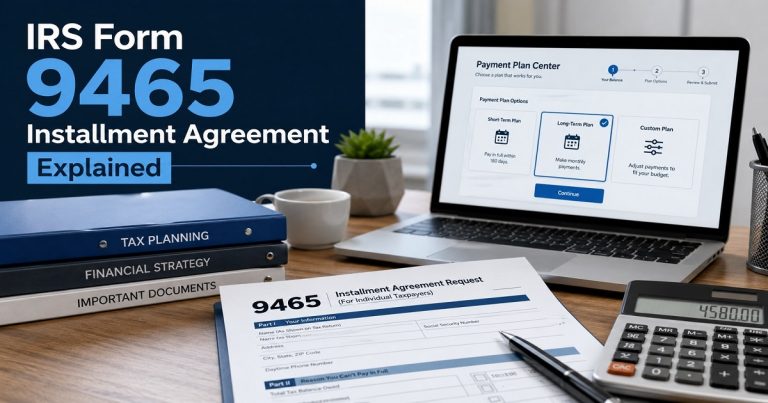
This includes IRS payment plan requirements, IRS payment plan eligibility, IRS payment plan approval, IRS payment plan interest as well as IRS payment plan penalties that should be considered prior to applying. When it comes to IRS payment plan online, or paying IRS debt monthly, taxpayers often have questions about how to do this. IRS Form 9465 is usually the IRS form that is used for the request for an installment payment schedule.
IRS Payment Plan Fees and Costs
The IRS payment plan fees are different for each payment plan. The Internal Revenue Service (IRS) has a series of rules regarding fees for short, medium and long-term plans. Fees are $0 for short-term plans, $22 for online long-term direct-debit plans, $107 for online long-term plans (direct-debit or not), $69 for long-term plans (direct-debit or not) set up by phone, mail, or in person, and $178 for long-term plans (direct-debit or not) set up by phone, mail, or in person. Depending on the situation, low income taxpayers might qualify for the waiver/reimbursement.
Also taxpayers should take into account the following IRS penalties and interests: IRS penalties and interest, IRS late payment penalty, failure to pay penalty, failure to file penalty, IRS interest on unpaid taxes, IRS underpayment penalty, and possible IRS collection cost. As the debt continues to be open for longer, the IRS tax debt will continue to increase over time.
Offer in Compromise: Can You Settle IRS Tax Debt for Less?
An IRS offer in compromise is an alternative to paying all the taxes that are owed to the IRS. It is not a given IRS debt forgiveness, however. The IRS OIC application is based on the IRS offer in compromise eligibility, financial disclosure and reasonable collection potential.
There are three primary grounds: doubt about the collectibility, doubt about liability, and effective tax administration. The IRS Forms that are required include IRS Form 656, IRS Form 433-A OIC and IRS Form 433-B OIC. Complete financial statements, application fee (as required), and first payment should be included with Form 656, the IRS says. The current Form 656 booklet indicates that the cost of filing each Form 656 is a $205 application fee and the first tax payment, except if the individual is low income certified.
There are two different types of offer in compromise payment options: lump sum and periodic. Some of the most common IRS OIC errors involved in preparing IRS OICs are providing the IRS with too little, providing IRS documents that aren’t necessary, hiding assets, not understanding the IRS compromise settlement rules, and not trying to appeal an IRS OIC rejection when they are entitled to do so.
Murphy v. Commissioner is a helpful real case in this regard. Edward Murphy owed more than $250,000 and offered $10,000. It was offered to him by the IRS which they thought he could pay more and the court agreed. The case explains the reason for the IRS to reduce tax settlement offers when they are not reasonable in comparison to the IRS’s reasonable collection potential.
Currently Not Collectible Status and IRS Hardship Relief
IRS currently not collectible status (also referred to as IRS CNC status) may be beneficial when on a taxpayer is unable to pay without sacrificing the means to meet basic living costs. It may be a part of the IRS hardship program and cause an IRS collection hold or IRS suspended collection action.
IRS hardship documentation may include IRS Financial statement, IRS 433-F, IRS 433-A, IRS 433-B, bank statements, proof of income, proof of housing expenses, utilities, transportation expenses, medical expenses and more. Later, the IRS may deem a review of the account needed via an IRS CNC review.
Debt does not go away due to CNC. While some IRS collection actions are suspended, penalties and interest on taxes may still accrue and the IRS could still issue a Notice of Federal Tax Lien.
The case of Vinatieri v. Commissioner is a solid hardship case. Even if there were filing compliance issues, the Tax Court ruled, the levy would have to be lifted because of the economic hardship. This is crucial for taxpayers who are in IRS levy hardship or seeking to grasp how to acquire currently not collectible standing.
IRS Tax Lien Explained
A tax lien is the legal claim of the IRS on property if a taxpayer doesn’t pay their federal tax debt. A federal tax lien may impact real estate, business property and other property rights. According to the IRS, a federal tax lien occurs when the IRS bills a person to pay the taxes and the person doesn’t pay the taxes in full.
A notice of federal tax lien is issued to make a federal tax lien public when a federal tax lien is filed. The IRS has a number of objectives and remedies for taxpayers include IRS lien removal, IRS lien release, IRS lien withdrawal, IRS lien discharge, or IRS lien subordination.
For instance, a lien discharge might be useful for a sale of certain property, and lien subordination might be useful if refinancing will enhance the IRS’s collection position. Some common IRS lien search keywords include IRS lien search, IRS property lien, IRS lien on property, IRS lien after unpaid taxes, how to remove IRS lien, IRS lien appeal, IRS tax lien notice, federal tax lien process, IRS lien rights, and IRS lien payment plan.
There is a difference between IRS lien vs levy. A lien is a type of legal claim. When payment of a tax is taken, it is actually seized.
IRS Tax Levy, Bank Levy and Wage Garnishment
A tax lien is more aggressive than an IRS tax levy since the IRS can take property or the right to possession of property. IRS Publication 594 defines a levy as being placed upon wages, bank accounts, retirement income, social security benefits and other property rights.
A bank levy can be used to access the money of an account. Wage garnishment or a wage levy can be carried out by an employer. Some common keywords taxpayers enter when searching IRS levy notice, IRS levy on bank account, IRS bank account frozen, IRS wage garnishment release, IRS levy on Social Security, IRS property seizure, IRS levy after CP504, IRS final notice before levy and how to stop IRS levy.
Some options may be making a balance payment, arranging an installment agreement, filing an OIC, filing a CNC, filing a request for IRS levy release or proving hardship or filing a collection due process hearing request.
Taxpayer Rights and IRS Collection Appeals
IRS taxpayer rights are of concern throughout. The Taxpayer Bill of Rights contains: The IRS’s right of appeal, IRS right of representation, IRS right of privacy, IRS right of finality, and IRS right to challenge IRS position.
IRS Form 12153 Collection Due Process (CDP hearing IRS) is a form that taxpayers can use to request a collection due process (CDP) hearing with the IRS. A collection due process hearing can discuss proposed collection options, IRS appeal collection decision issues, and levy action and lien filing. In a few instances, an IRS equivalent hearing may still be available if the deadline is not met. Taxpayer Advocate Service assistance is also available to taxpayers in cases of serious hardship and/or long outstanding problems.
The reasons that Goza v. Commissioner is often cited in CDP cases are to help explain the limits on challenging the underlying tax liability when it was the taxpayer’s previous opportunity. Robinette also adds to the IRS’s understanding of the review of a CDP and the administrative record in IRS collection cases.
IRS Business Tax Collection
Business tax debt with the IRS may be a more pressing issue than individual tax debt, and particularly in the case of payroll taxes. IRS payroll tax debt, IRS employment tax collection, IRS unpaid payroll taxes, IRS Form 941 tax debt, IRS federal tax deposit penalty, IRS payroll tax penalty, IRS business tax lien and IRS business tax levy may be part of the business tax collection process.
Withheld payroll taxes can be applied to pay rent during a lag period in a small business. That poses a real issue as far as payroll taxes are concerned since the trust funds are included in the payroll taxes. IRS trust fund penalty may result in personal liability for those responsible. There are several IRS business payment plan, business tax resolution, business tax account review and IRS collection notice for business support that a business may require. It is applicable to IRS tax debt LLC, IRS tax debt corporation and IRS collection small business.
What Happens When an IRS Revenue Officer Gets Assigned?
If the case is more serious, an IRS revenue officer will make his appearance. IRS field collection can consist of an IRS appointed revenue officer, IRS in-person collection visit, IRS collection interview, IRS financial disclosure, IRS revenue officer appointment, IRS field office collection, IRS tax compliance officer, IRS collection investigation, IRS revenue officer contact, IRS revenue officer letter, IRS collection summons, IRS asset investigation, IRS financial analysis, IRS collection enforcement officer, IRS taxpayer interview, or IRS business collection visit.
Once an IRS collection case is under the direction of a revenue officer, the taxpayer should get ready to meet the revenue officer. Collect any notices, returns, bank statements, income records, expense documentation, asset information, business records and previous IRS payment agreements. Smart Tax Guides are read and prepared by professionals, which is why it is important to be aware that preparation can make or break the case being manageable or heavy in enforcement.
Documents Required for IRS Collection Resolution
If an IRS installment agreement, the following would be necessary: IRS Form 9465, pay stubs, bank statements and the records of all of the taxpayers monthly expenses. Documentation of income, business records, asset information, and IRS Form 656, Form 433-A OIC, Form 433-B OIC could be required.
Documents for currently not collectible include: Form 433-F, Form 433-A, Form 433-B, rent proof, utilities, food, medical expenses, transportation costs and bank statements. When a CDP Hearing, the IRS notice (Form 12153) is issued a financial statement and a proposed collection alternative are key. Taxpayers should consider submitting a reasonable cause penalty relief statement, IRS penalty abatement request, medical records, disaster proof or correspondence for relief in the event of a penalty.
Common IRS Collection Problems and Solutions
If you don’t deal with the problem IRS notices, the answer lies in opening all of the letters, checking with the IRS online account and answering in time. If the problem is due to a bank levy filed on the taxpayer, the taxpayer should reach out to the Revenue Department to request the release of the levy, declare hardship (or arrange a proper collection alternative). Appeal, installment agreement, or CNC status is available if the problem is wage garnishment.
If the issue is an OIC rejection, consider reasonable collection potential and appeal, if appropriate. If the payment plan failed to be paid, renew it and keep up the payment of subsequent taxes. Consider lien subordination, lien discharge, lien payment or withdrawal if a lien is blocking the refinance. Consider IRS penalty relief, IRS first-time penalty abatement, IRS tax penalty appeal, IRS penalty reduction, and reasonable cause, if penalties are increasing.
IRS Collection Mistakes to Avoid
The worst IRS payment plan pitfalls include selecting a payment option that’s too expensive, missing the deadlines and accumulating tax debt during the payment plan. The most frequent IRS collection mistakes are: not filing tax returns, inaccurate financial data, late response, failure to respond to the IRS and mistaking a tax lien for a tax levy.
Some other errors are: Filling out the OIC without verifying its requirements, not filling out all of the forms and not receiving payment confirmation, not maintaining the payment confirmation, and believing the IRS will automatically cease collection efforts. Those seeking to clear up IRS tax debt should take things one step at a time: Open all notices, review the balance, file with the IRS, select the best collection option, prepare the documents, submit on time, follow up on the IRS response, and maintain IRS compliance.
Real Case Studies
Case Study 1: Individual With $12,000 IRS Balance
A taxpayer gets a CP14, and he decides not to pay. A taxpayer gets a CP14 and decides he will not pay. Penalties and interest increases. The answer is an online payment plan that’s financially feasible and offers a realistic monthly payment. There is a lesson to be learned from early response – enforcement does not occur.
Case Study 2: Self-Employed Worker Facing Bank Levy
If a freelancer refuses to pay LT11, he will be hit by IRS bank levy. The resolution is a financial statement, hardship request and levy release argument. Vinatieri believes that the analysis of economic hardship is important.
Case Study 3: Business With Payroll Tax Debt
A business failures to payroll taxes and fails to make Form 941 deposits. The answer: File all returns, cease the new debt, and work out a deal with the IRS! Tax debt for payroll taxes is a pressing matter.
Case Study 4: OIC Rejection
An IRS tax settlement offer is too high and is made by a taxpayer. The IRS rejects it. The answer is to rework a good collection potential and submit an appeal to IRS OIC if the IRS financial analysis is incorrect.
FAQs
What is the IRS Collection System?
The IRS Collection System is a procedure that the IRS follows after assessment, notice, and demand for federal tax debt to be paid.
How does the IRS collect unpaid taxes?
Typically, the IRS will start with correspondence and provide assistance in paying – or collection alternatives. It can file a tax lien or issue a tax lien if left untreated.
What happens if I cannot pay the IRS?
A short-term payment plan, long-term installment agreement, offer in compromise, currently not collectible status, penalty abatement, and appeals are available for your request.
Can I negotiate with the IRS?
Yes, but IRS tax negotiation relies upon financial proof, eligibility, adherence, and on whether the option is in keeping with IRS regulations.
What is an IRS installment agreement?
An IRS monthly payment plan where the IRS debt is paid in monthly installments is referred to as an installment agreement.
What is an offer in compromise?
The IRS debt settlement program that may be able to help you settle tax debt for less than what you owe is called an offer in compromise.
How long can the IRS collect tax debt?
Typically, the IRS will have a limited period of time for collecting, but there are some circumstances that may add to that time. Taxpayers should verify their transcripts or consult their tax professional.
How do I contact the IRS about collections?
If there are problems or hardships, use the phone number provided on your IRS notice, your IRS online account, IRS payment plan online tools, or the Taxpayer Advocate Service.
Conclusion
The IRS collection process may seem like a daunting experience, but it goes through a process. Knowing the notice, checking the balance, selecting the appropriate action, creating documents and responding prior to enforcement is the best way of approaching the notice. It doesn’t matter if it’s IRS collection notices, IRS tax debt settlement, IRS payment options, IRS collection appeal rights, tax liens, levies or business tax debt; it all starts with action. When readers start thinking about getting their tax debt resolved, they should look at Smart Tax Guides as a sort of guide to help them not fret or get lost.