IRS Took My Refund: What To Do? (Proven Refund Recovery & IRS Offset Solutions Guide)
In the perspective of Advocate Shahid (Tax Compliance and Advisory Specialist). IRS Took My Refund: What To Do? The IRS deducted your refund because it was used to satisfy a federal/state debt (offset) or for verification. Know the cause by using the IRS “Where’s My Refund?” or IRS Online Account. A notification will be sent to you explaining the decrease; if the decrease is because of debt, call the Treasury Offset Program at 800-304-3107.
Immediate Steps to Take
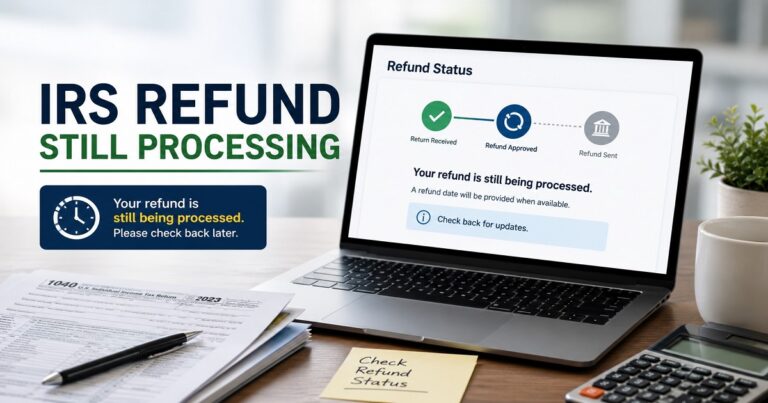
See “Where’s My Refund?” Tool
Check to see if the IRS issued the refund, reduced it, or sent a notice.
Search for Notices
IRS mails a notice (such as CP53E) to tell you why a refund was held or corrected.
Contact the Offset Line
If you think you may have debt, contact the Treasury Offset Program (TOP) at 800-304-3107 to determine if any of your refund was applied to federal or state debts (such as student loans, child support or back taxes).
Why the IRS Took Your Refund
Federal/State Debt (Offset)
The refund was applied towards unpaid child support, federal student loans or state income tax.
Back Taxes
You owe taxes from a previous year
Identity Verification
IRS is marking the return for possible identity theft.
Math Errors
Your tax calculation was found to have an error, and the IRS fixed it.
What To Do Next
If it is an Offset
If you are not in agreement with the debt, contact the specific agency it was sent to, the IRS will not reverse an offset.
If you are a Joint Filer (Spouse’s Debt)
When the IRS used your share of a joint refund to settle your spouse’s debts, file form 8379, Injured Spouse Allocation.
If it’s an Error (Paperless Verification)
If you receive a CP53E notice you have 30 days to verify identity/information for the refund. If not, a paper check will be sent within 6+ weeks.
In case you are facing financial hardship
Contact the Taxpayer Advocate Service (TAS) at 877-777-4778.
Important Numbers
IRS Refund Hotline: 800-829-1954
Treasury Offset Program (TOP): 800-304-3107
Taxpayer Advocate Service: 877-777-4778
Note: The wait times for e-filed and paper-filed refunds in 2026 are up to 21 days and up to 15 weeks, respectively.
Introduction
It can be a huge shock and feel as though you are experiencing a IRS refund seizure when you discover that your refund money is gone. The question that many people would ask is “Why did IRS take my refund?” or “What do do if IRS takes your refund?”
If the Internal Revenue Service (IRS) withholds or redirects your refund, it’s most probably not random. This is known as a refund offset which is where your refund has been used to offset an existing debt like unpaid taxes, student loans or other debts.
So if the IRS took your tax refund, deducted it from an IRS balance or sent you an IRS refund offset notice, the first step to correcting it is to understand why.
👉 This guide offers you immediate assistance with filing a refund, expert advice, and a few proven refund-recovery strategies so you can find out what went wrong — and what you can do next.
Why Did IRS Take My Refund? (IRS Refund Offset Explanation)
When your refund was confiscated, it is most likely that it was done by the IRS—it wasn’t a random act. This indicates that your refund has gone towards a debt that you had with the Treasury Department
Most Common Reasons Your IRS Refund Was Taken
IRS Refund Taken for Debt (Most Common Reason)
If you are in debt to the IRS, then the IRS is allowed to legally use your refund to pay off your debt.
IRS Refund Applied to Balance / Tax Debt
Federal taxes may be due for prior year(s) and your refund could be applied to them.
IRS Offset for Back Taxes
Refund offsets are automatically applied against old tax debts, until they are paid.
IRS Offset for Student Loans
If you have defaulted federal student loans, then your refund can be seized.
IRS Offset for Child Support
One of the biggest causes for refunds being intercepted is for collections of overdue child support.
Treasury Offset Program Explained
The Treasury Offset Program (TOP) gives government the power to recover debts by diverting federal money such as tax refunds to the debt recovery agency.
👉 Key Insight
If the IRS has issued a full tax refund, there’s probably a huge tax debt. The first step towards finding a solution to the issue or recovering some of your refund is to understand exactly what cause is.
IRS Refund Offset vs Refund Delay (Important Difference)
Many taxpayers think a delay is a seizure, but it’s not, it’s a completely different act of the Internal Revenue Service.
IRS Refund Delay (Processing Issue)
Delay indicates that your refund is still in the process of being refunded. This can be a result of Errors, Identity Verification or IRS Backlog. In this instance you don’t lose your money, it is merely pending.
IRS Refund Offset (Seizure Explained)
An offset is the indication that your refund went towards a debt. The IRS can legally use your refund for unpaid dues, such as back taxes, student loans or child support through the Treasury Offset Program.
Difference Between IRS Seizure and Garnishment
Refund Offset (Seizure): IRS holds on to your tax refund before you receive it.
Wage Garnishment: IRS Garnishes your Paycheck
Both are legal collection methods just that they pertain to different income sources.
IRS Refund vs Tax Debt Adjustment
In some instances, your refund is less because of changes made to your return and not debt. This is known as an adjustment, this is not a seizure.
👉 Key Insight
Your refund is “still processing” – this is a delay. If it’s less or missing, and you are notified, it probably is an offset or an adjustment.
IRS Notice & Verification (Check Before You Act)
The IRS Notice & Verification (Check Before You Act)
IRS letters that explain why the agency wants to verify a return.
Always read the notice from the Internal Revenue Service before taking any action. By knowing what IRS offset notice letter you received, you’ll be able to prove why your refund was withheld.
IRS Notice CP49 Meaning
A CP49 notice will give you information about a debt to which your refund was applied. It displays the amount of the original refund, the amount of the offset and the remaining amount of refund (if there is any).
IRS Letter About Refund Taken
The information contained in this letter is to tell you where your money went (this could be used for back taxes or another agency through the Treasury Offset Program).
How to Read IRS Offset Notice
- Review notice number (CP49, for example)
- Check on the sum deducted
- Debt/agency identified
- Include contact information if needed for follow up
How to Check Refund Status
Use IRS Where’s My Refund Tool
Use an online system to monitor the status of your refund to determine whether it was processed, delayed or offset.
IRS Account Transcript Refund
Detailed record of refunds, offsets and adjustments are reflected on your transcript.
Verify Refund Offset Reason
Check your notice against your records to make sure that you understand why your refund was taken.
👉 Key Tip
Remember to always verify rather than assume the notice. This will mean you are not confused and don’t take the wrong next steps.
How to Check Why IRS Took Your Refund – Step 1
The Internal Revenue Service can explain why your refund was seized, so before you take any steps, ensure that you understand why your return was. This will prevent you from getting into the “refund gone IRS” situation and will make sure that you don’t make the wrong decision.
How to Check Why IRS Took Refund
1. Verify Refund Offset Reason
See which debt your refund went towards in your IRS notice (CP49): tax debt, student loan debt or child support.
2. Check IRS Account Transcript
Refund offsets, adjustments and payments are clearly listed on your transcript.
3. Use Official Tools
Use the IRS tools, such as ‘Where’s My Refund’ to check to see if your refunds have been processed or offset.
4. What to Do If IRS Refund Taken but No Debt Owed
If you think that there is no valid debt:
- Communicate with the agency noted in the notice (not necessarily IRS)
- Include payment proof/evidence of error
- Reclaim a Correction or Refund Review
👉 Key Tip
Always check first – many problems arise only because of the wrong records or debt information, which is outdated, and it may be possible to correct it with the correct documentation.
Common Problems Taxpayers Face
Many taxpayers face a dilemma and stress after a refund is less than expected or is totally unexpected due to their interactions with the Internal Revenue Service. The most frequently encountered pain points:
IRS Took My Refund Without Notice
Usually the notice is issued separately, or mailed at a later time. Sometimes taxpayers don’t receive it or it comes after the offset has taken place.
IRS Took Full Refund
This typically happens when your refund is used to pay off debt you might have with the Treasury Offset Program, which includes back taxes, student loans and child support.
Missing Tax Refund IRS Issue
When a “missing refund” occurs, this typically means that the refund was processed but sent to other balances or to an agency rather than deposited.
IRS Refund Confusion
Many people don’t know whether their tax refund is under- or over-paid, or if it has been offset, particularly when they receive several notices from the IRS.
Cannot Get My Refund Back
Getting a refund from a lawfully-offset refund will be difficult if there is no evidence of error or incorrect debt attribution that can be proven and disputed.
👉 Key Insight
The majority of refund issues are due to miscommunication or outstanding debts. The easiest way to get clarity and to know what to do is to review your IRS transcript and notice.
Step-by-Step Refund Recovery (IRS Refund Problem Solution)
When the Internal Revenue Service takes or reduces your refund, you’ll have a process to follow to know what’s going on and if there’s any way to retrieve the refund.
Step-by-Step Refund Recovery IRS
1. Confirm IRS Offset Reason
It is a good idea to first review your IRS notice (CP49) and account transcript to determine the reason for the withdrawal and what debt was paid.
2. Contact IRS or the Listed Agency
Call any other agencies (such as student loans or child support) if the offset is being paid to another agency, to be sure of the debt information.
3. File Dispute IRS Refund Seizure
If the amount of the offset is incorrect, make a formal dispute with evidence that the debt is incorrect or has been paid.
4. Submit Required Documents
Include bank statements, payment receipts or tax documents to validate your claim and facilitate review.
5. Track Refund Recovery
Check the information in your IRS account or on IRS notices for changes and/or reversals.
6. Follow IRS Refund Dispute Process
Your case will be reviewed by the IRS or appropriate agency that will determine if the refund is correct or should be refunded.
👉 Key Insight
If you have any refund problem, it is likely to be corrected with documentation and verification. The sooner you act, the better you’ll be able to resolve the matter; and the better you can resolve IRS refund problems efficiently.
Your Legal Rights (Can IRS Legally Take My Refund?)
Understand your rights when dealing with the Internal Revenue Service, if your refund was taken. While refund offsets are legal in many cases, there are certain protections and options that are available for challenging or recovering refunds.
IRS Refund Offset Rights
The IRS may use your refund for specific debts through the Treasury Offset Program (TOA), but must follow certain procedures.
IRS Taxpayer Rights Refund
Be entitled to:
- Be notified about the offset
- To empathize – to understand what makes them do what they do
- Dispute incorrect debts
- Ask to have it reviewed/corrected
Can IRS Take My Refund Without Notice?
In most instances, notice must be given. But, if the mail is not received or if there have been notifications of debt in the past, this may appear to be not notifying at all.
IRS Offset Appeal Process
Appeals and disputes to overturn an offset are also possible, and must be filed with supporting documents.
Special Relief Options
Innocent Spouse Relief IRS Refund
The IRS offers Innocent Spouse Relief to claimants who have received IRS refunds.
Safeguards you if the refund offset is due to its spouse’s tax problems.
Injured Spouse Refund Claim
Enables the recovery of an expedient reimbursement in case a joint refund has been taken for the debts of your spouse.
IRS Hardship Refund Return
In very few circumstances, some forms of financial hardship can make it possible to secure some relief or partial recovery.
👉 Key Insight
Even though the IRS is authorized to offset refunds, there are still steps that can be taken to contest, appeal and seek relief from the IRS in the event of an error or unfair circumstance.
How to Appeal & Dispute IRS Refund Offset
There may be some ways for you to appeal if your refund was taken or reduced by the Internal Revenue Service. If the offset was made in error or is unfair, knowing how to appeal IRS refund can help you to recover your money.
How to Dispute IRS Refund Offset Step by Step
1. Review the Offset Notice Carefully
Read the notice (CP49 etc.) to find out the reason for the application of your refund and what debt it was applied to.
2. Verify the Debt Accuracy
Verify if the debt is legitimate, by consulting your IRS account transcript and personal payment records.
3. Contact the IRS or Related Agency
If it appears there is a problem, please contact the IRS or the agency indicated in the notice (such as student loan or child support agencies).
4. Submit a Formal Dispute
Write out details and documentation of how the offset is wrong or is paid.
5. Follow Up on Your Case
Monitor the status of your dispute in IRS correspondence until the dispute is resolved.
Reclaim IRS Refund Legally (Best Method)
Documentation-based disputes, injured spouse claims or claims the debt was incorrect or already paid are the best ways to recover a tax refund.
👉 Key Insight
The key to successful recovery is to have solid evidence, act in a timely fashion and correctly follow IRS procedures.
What Happens If IRS Keeps Your Refund?
When the Internal Revenue Service does not send your refund, it typically was used to pay something that you were legally owed, not sent to you.
IRS Debt Collection Refund Offset Explained
The money that you get back in your refund can be used to pay off debts including:
- Back taxes
- Federal student loans
- Child support arrears
- Other government-related debts
What Happens Next?
- A notice of the offset will normally be given to you.
- The refund that you are eligible for is deducted or completely consumed
- There will be any amount of debt that remains and it has to be paid separately.
Tax Refund Garnishment IRS Explained
Typically, this applies to wages – and so it does with refund offset – your tax refund is held up before you can receive it and it goes toward a debt.
👉 Key Insight
The IRS will not cancel the debt if they withhold the refund. It does not remove it altogether but only lowers or removes it partially. You may still need to make arrangements to pay or challenge the offset in the event that you think it was wrong.
How to Stop IRS Taking Refund in Future
To prevent another refund offset from the IRS, you need to take proactive steps on how to manage your tax account. There is no way to “block” legal offsets, but there are measures you can take that will minimize the risk of future refund seizures.
How to Stop IRS Taking Refund (Practical Steps)
1. Avoid Refund Offset IRS (By Clearing Old Debts)
The best approach is to pay or reduce any outstanding tax debt, in this way, there is no debt to offset against future tax refunds.
2. IRS Payment Plans to Avoid Offset
When an installment agreement is set up, you will be able to keep up-to-date and avoid harsh collection methods that can result in offsetting your refunds.
3. File and Pay Taxes Accurately
Don’t underreport income or neglect to make payments, because you are likely to create a future balance.
4. Monitor IRS Account Regularly
Review your IRS online account or transcript to identify problems as soon as possible so that they don’t delay your refund.
Protecting Future Tax Refunds (Legal Tips)
- Be up-to-date with tax filing and tax payment
- Be responsive to IRS correspondence.
- Make withholding adjustments if you owe taxes on a regular basis
- Take advantage of payment plans in order to avoid late debt.
👉 Key Insight
While there may be no way to avoid an offset with unpaid debts, there may be ways to avoid the problem or minimise the risk of future offset by managing your tax behaviour.
Real-Life Example (Personal Experience Style)
👉 Example
Sarah was expecting a $3,000 tax refund from the Internal Revenue Service, but instead, she doesn’t have anything in her bank account from the IRS.
What happened
She had a federal student loan debt that was paid off from her refund using the Treasury Offset Program.
She later got the notice of IRS refund offset for the deduction.
What she did
- Verified her IRS account transcript to verify offset reason
- Called student loan agency to check status of student loans
- Filed an injured spouse refund claim to get her share of the refund
Result
Sarah was able to submit the appropriate documentation and went through the dispute process and received part of her refund within 8 weeks.
👉 Key Insight
Taxpayers who are aware of an offset may still have some legal recovery options even if they have signed a refund, if it is for some errors or shared refund rights.
Real Case Study (Practical Insight)
Case Study: Child Support Offset
The IRS seized a taxpayer’s refund, using the Treasury Offset Program to deduct money from the refund for overdue child support payments.
What happened
- Because of child support debt reported it did not get the full refund.
- The taxpayer thought the balance was wrong and not up-to-date.
- A formal claim with payment records was made
What they did
- Asked to relook at child support remaining
- Proved previous payment(s)
- Completed the proper refund offset conflict procedure
Result
The agency verified after some review that part of this debt had already been paid. The taxpayer had a portion of the amount refunded.
👉 Insight
The IRS refund dispute procedure can work where the taxpayer has definite documentation and challenges the inaccurate or outdated debt records as in this case.
Common Mistakes to Avoid
While working with the IRS on a refund problem, minor errors can make it more difficult to recover or to obtain a resolution. To prevent having to miss out on refunds, avoid these common mistakes.
Ignoring IRS Offset Notice
The notice that gives reasons for the refund is being missed by many tax payers. This causes a confusion of expectations and missed deadlines for corrections and/or appeals.
Not Checking IRS Account Transcript
If you don’t check your transcript, then you may not realize that you have an outstanding debt, an offset or some adjustments that impacted your refund.
Delaying Dispute Process
Delay in action may decrease the likelihood of a successful recovery recovery, particularly if deadlines are involved with appeals or corrections.
Assuming Refund Is Lost Forever
Refunds can be fully or partially recovered if there are mistakes or incorrect debts, in many cases.
Not Using Legal Options
There are opportunities available that taxpayers may not be aware of, such as injured spouse claims, hardship relief or formal disputes, that can help to recover funds.
👉 Key Insight
Refund issues can be resolved if one takes prompt action, checks on information and uses the correct legal procedures rather than turning a blind eye to the problem.
Expert Tips (Fast Refund Solution)
In the world of the IRS, speed and accuracy is important with a refund matter. The right steps will make it easier for you to find a solution to the problem more quickly.
Act Quickly After Notice
Check an offset/adjustment notice as soon as it is received. Delays may limit your dispute and/or recovery opportunities.
Always Verify Before Reacting
Don’t take action until you’ve reviewed every detail on your IRS account transcript and notice. This ensures you won’t make any errors and can prevent undue stress.
Use Quick IRS Refund Fix Strategies
Problems can be solved in no time at all just by fixing records or calling the agency on the list or by filing a claim.
Keep Documentation Ready
Keep records of all payments, income and correspondence. The more robust the documentation, the faster it will be verified and resolve any disputes.
Follow Up Consistently
Don’t assume that the problem has been corrected after the first submission. The regular follow-ups will keep your case active and appropriately monitored.
👉 Key Insight
Early action, timely and correct verification, and follow-through are critical to achieving speedy resolution, and they positively affect refund recovery.
FAQs
1. Why did IRS take my refund?
Typically due to unpaid debt, like unpaid child support, student loans or back taxes taken care of by the Internal Revenue Service via the Treasury Offset Program.
2. What to do if IRS takes your refund?
Review your IRS notice, confirm the reason with your account transcript and initiate the dispute/recovery process if necessary.
3. Can I get my refund back from IRS?
Yes, but only if the offset was wrong, or you are eligible for certain relief such as being an injured spouse or a controversy claim.
4. Can IRS take my whole refund?
Yes. If your debt is equal to or greater than your refund, then you can use the entire refund to pay down your debt.
5. How to check refund offset?
Check your IRS online account, “Where’s My Refund” tool, or the letter that was mailed about the offset.
6. How long does refund offset take?
Your offset will generally be processed as soon as your refund is issued, but it may take weeks or months if there is any recovery or dispute.
7. Who can take my tax refund?
Through the Treasury Offset Program, the IRS or other government entity (such as child support or student loan offices).
8. How to stop IRS refund offset?
Settle up on unpaid debts, establish a payment plan with the IRS or enroll in a tax relief program if you’re eligible for it.
Conclusion
Don’t fret if the IRS gobbled up your refund; while most of these situations occur because of a legitimate offset, there may be a way to avoid them. It is important to know the reasons why it occurred and to take prompt action.
You can correct the inaccuracies or even get some of your refund back if one is due when applicable by reading your notice, checking your IRS account information and taking the proper refund recovery or dispute action.
👉 Take Action Now
Don’t ignore this problem, review your documents, reply to the notice, file a dispute if necessary, and safeguard your tax refunds against future problems, using intelligent and proactive strategies.