IRS Account Balance Explained (2026): What Is IRS Balance Due & How to Manage It
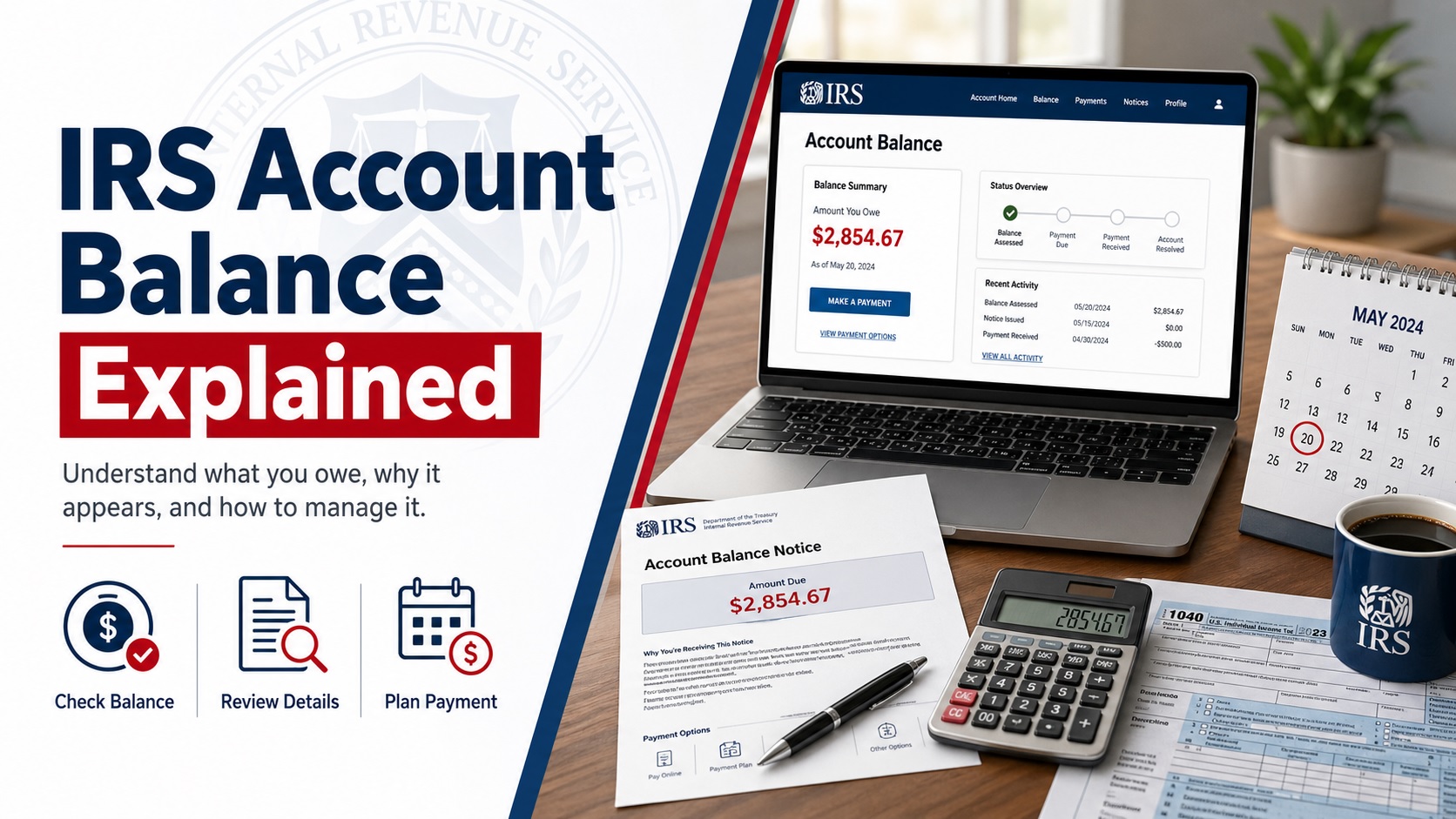
In the opinion of Advocate Shahid (Tax Advisory and Research Specialist). The IRS Account Balance is the total amount of taxes, interest and penalties which a taxpayer owes to the government during one or more tax years. This balance can be understood by keeping track of any adjustments, accrual of interest and paying through online tools to keep track of payment.
Important Details of Your 2026 IRS Account Balance
Interest Rates
The interest rate on payment plans charged by the IRS is generally the federal short-term rate plus 3%, and is likely to be approximately 7 percent annually in 2026, compounding on a daily basis.
Punishments
In case one does not pay the balance, a monthly fine is imposed. When an Installment Agreement is in place, the Failure to Pay penalty is lowered to 0.25% per month as opposed to 0.5%.
Total Annual Cost
A combination of interest and penalties can result in the cost of carrying a balance being approximately 10 percent per year.
Common Reasons for Balance Changes
The IRS can change your balance because of mathematical mistakes, missing information, or other reasons based on the information provided by third parties (e.g., W-2s, 1099s).
How to Check Your IRS Balance (2026)
View Online: Go through the IRS web site.
By Phone: Call the IRS at 800-829-1040.
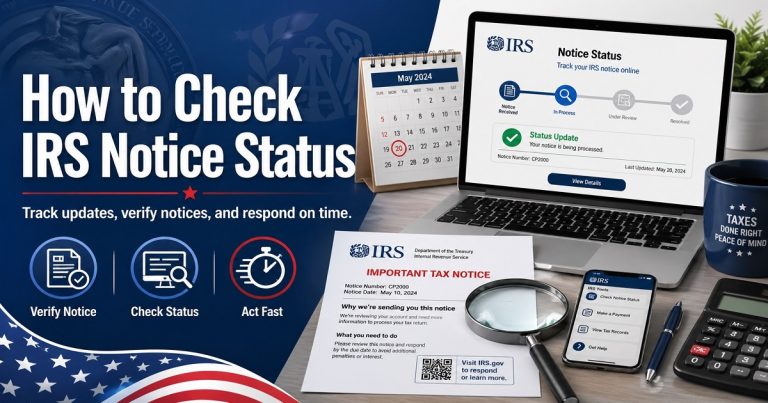
Via Mail: The IRS will include notices (e.g., Letter CP14) describing the amount owed.
Introduction
One of the most frequent issues that taxpayers encounter when working with the Internal Revenue Service (IRS) is the term IRS account balance and the reason why IRS account balance is the amount of money that taxpayers owe the Internal Revenue Service. Or to put it in easy terms, the amount of money you owe (or sometimes are owed) after your tax return has been prepared is what your IRS account balance is. It shows any unpaid taxes, penalties or interest that will be shown on your account.
When people observe such words as IRS balance due or IRS outstanding balance, many people will be confused, especially when they thought that they were going to get some money back. These figures may be attributed to lowly paid taxes, difference in calculation or changes by the IRS.
👉 Personal Insight
It happens to many taxpayers that they get scared when they see a balance due to the federal tax, but most of the time, it is caused by simple miscalculations, underpayment or simple corrections by the IRS, which can easily be corrected with adequate review and action.
What Is IRS Account Balance? (Simple Explanation)
Your IRS account balance is the total amount that you still owe (or are owed) after Internal Revenue Service processes your return. Simply put, the meaning of IRS account balance is your final balance of your IRS tax account as shown in your IRS account summary balance- this includes any unpaid taxes, penalties or interest.
IRS Amount Owed Explained
When you make less than your total tax bill in the form of payments (withholding, estimated taxes) to the government, a balance due will be shown. In case you paid in excess of what you were called upon to pay, then you will get a tax refund.
Difference: Tax Refund vs Balance Due
Tax refund: Excess payment by you>IRS refunds money.
Due balance: You underpaid will result in you owing the IRS.
👉 Example
Assuming that you have a total tax of $2,000 but have already paid $1,500 during the year, then your account balance in your IRS account = balance due $500 of federal income tax.
Tax Liability vs Balance Due IRS (Key Concept)
Tax liability vs balance due IRS is critical in order to have no confusion when going through your return with the Internal Revenue Service.
👉 Tax Liability = Total Tax Owed
The entire amount of tax that you are liable to pay on the basis of your incomes, deductions and credits. This is computed without taking into consideration any payments that you have already paid.
👉 Balance Due = Remaining Unpaid Taxes
What remains after deducting payments such as withholding or estimated taxes, are the amounts left of your total liability and they are called your balance due.
👉 Simple Breakdown
Tax Liability ↫ Total bill.
Payments Made → What you previously paid.
Balance Due→ What you still owes.
👉 Example
Assuming you are liable to pay the IRS $3,000 in taxes and you have already paid the IRS $2,200 in tax through withholding, then you will be liable to pay the remaining amount of 800 dollars in taxes to the IRS.
👉 Key Insight
The difference that exists between them is what many taxpayers fail to understand and consider themselves to be overcharged by the tax authorities, yet in reality, the balance they are due is simply a reflection of what they are not paying, as part of their original tax obligation.
How IRS Calculates Your Account Balance
The internal revenue service has a simple balance calculation system to determine the final amount you will owed or refunded. To find out the influence of every part in your overall picture, you can use your IRS account transcript balance and IRS account statement breakdown.
Key Factors in IRS Tax Bill Breakdown
- Income: All reported revenues (salary, business, investments) are determined as to calculate your total tax liability.
- Credits: Tax credits lessen the sum you are owed (e.g., child tax credit).
- Estimated Tax Payments Balance: Payments made in the year (withholding or quarterly payments) are subtracted in reducing your liability.
- IRS Balance After Refund Adjustment: The IRS can make corrections to your balance (errors, missing information, etc.) and increase or decrease your final balance.
How It Works
Total Tax Liability -Payments +Credits=Plus Penalties/Interest (if any) =Final IRS Account Balance
👉 Real-Life Example
An individual who is self employed and earns less than was estimated quarterly as taxes. This led them to have an unpaid IRS taxes balance, penalties and interest, which amounted to much more than the original tax liability.
Components of IRS Balance Due
The Internal Revenue Service gets you on your total balance, which is comprised of a number of parts- not just unpaid taxes. Knowledge of these elements can assist you observe precisely why you are in debt.
Federal Income Tax Balance Due
It is the amount that you are liable to after deducting the payments (withholding or estimated taxes) to your total tax liability. When you had a bad year in terms of paid, then this forms your starting balance.
IRS Penalties and Interest Charges
Failure to pay taxes at the right time will have penalties and interest added by the IRS. These fees add to your overall balance with IRS over time until the balance is paid off.
Penalties and Interest IRS Balance
Popular additions are nowadays late payment penalties and penalties relating to accuracy and daily interest accrals on unpaid balances.
IRS Tax Debt Explanation
Your entire IRS tax is comprised of unpaid taxes + penalties + interest.
👉 Key Causes
Underpayment of taxes IRS: Not paying enough during the year
Penalties on late filing: You are late in filing your return.
👉 Simple Insight
The slight amount which you might not have paid can have a swift increase because of penalties and interests, that is why you should do it as soon as possible in order to decrease your overall balance with the IRS.
Common Reasons for IRS Balance Due
Learning the reason why you are owed some money by the Internal Revenue Service can eliminate confusion and help you to quickly fix the problem.
1. Underpayment or No Estimated Taxes
One of the most common reasons a balance due can be attributed to is underpayment of taxes IRS. When your balance of estimated tax payments is too small, particularly when freelancers or self-employed individuals are involved, there is a likelihood that one will end up with a balance of estimated tax payments due at year-end.
2. IRS Adjustments & Notices
At times the IRS will amend your filing after going through it. Balances such as the corrected income or disallowed credits can be included under an IRS notice balance explanation or IRS account adjustments explanation, and can give you a balance increase.
3. Errors & Discrepancies
The issues of the IRS account differences and variances may be caused by the discrepancies between income (W-2 vs reported) and various other items entered into the account. This usually causes IRS balance because of confusion to the tax-payers who are waiting to have their refund.
4. Penalties & Interest
Taxes owed to the government accumulate with time since there are penalties and interest charged by the IRS and added to your account.
5. Refund Adjustments
When the amount of your anticipated refund decreases or reverses, a balance in your IRS account after adjustment of the amount of refund to be received may appear leaving you with a balance in your IRS account that has changed because of the amount of refund that should have been received.
Real-Life Case Studies
Live-life applications in the case of the Internal Revenue Service demonstrate the way in which situations of IRS balance due occur-and how they are resolved.
Case Study 1
An IRS unexpected tax bill was given to a taxpayer who failed to report an income on freelance basis that was listed on a 1099 form. The IRS compared records by the third parties and added the missing income which boosted the balance as well as interest. Having read the notice, the taxpayer paid the amount of money that was corrected so that additional penalties would not be imposed.
Case Study 2
The other filer had their IRS balance, at a higher than expected amount, after recalculated tax credits. The IRS changed the eligibility according to the income limits. The tax payer challenged the change on which he produced supporting documents and the balance was adjusted after review.
Case Study 3
A taxpayer having a huge debt was unable to pay full and thus, he/she chose an IRS installment agreement balance plan. This enabled them to pay monthly over time not only relieving them the financial strain but also keeping them in line with the IRS rules and regulations.
Real IRS Rules & Legal Insights
Knowing what is expected of you and what the Internal Revenue Service requires of you will enable you to handle balances of tax confidently.
IRS Authority to Charge Penalties and Interest
The law permits the IRS to impose penalties and interest in case you fail to pay taxes on time. Interest is charged on a daily basis up to the time one completes paying the full amount of the interest.
Legal Obligation to Pay Federal Tax Balance Due
In case you have taxes to pay, then the law obliges you to pay the balance due on your federal tax. The failure to comply may result in further fines, warnings or seizure activities.
IRS Dispute Balance Process Rights
You are entitled to rights as well. In case you think that your balance is not correct, you can challenge it by sending responses to IRS notices, provide proof, or request a review.
Simple Insight
The IRS can order payments to be made, however, taxpayers can also request to question, verify and correct any mistake before payment.
Common IRS Account Balance Problems
It is often confusing to many taxpayers when their balance is not as expected by the Internal Revenue Service. The following are the most widespread issues with the account balances in the IRS and the reasons why they occur:
Why is my IRS balance incorrect?
This usually occurs because of the wrong records of income, lost forms or because the IRS has changed it after going through your return.
IRS Showing Wrong Amount Owed
When the IRS indicates incorrect amount owed, it might be because of changes in calculations, disallowed credits or post-filing penalties.
IRS Balance Not Updated After Payment
The payments can be slow to be processed. Bank transfer, checks or new payment may not show up instantaneously on your IRS account balance.
IRS Account Balance Issues
General problems are those where the system has slowed, the amended returns are being processed or there is an error in your filed return.
Quick Tip
It is always advisable to compare your tax return and IRS account transcript. When nothing is matching, reply to the IRS notices or support to fix the mismatch in the shortest time possible.
Step-by-Step Solution to Fix IRS Balance Issues
In case you have IRS account balances problems, follow this simple process advised by the Internal Revenue Service to identify and solve problems and precisely:
Step 1: Check IRS Balance Online
To begin with, get to know how to check IRS account balance using your IRS online account. The IRS balance status online provides you with the amount you owe, the payments, as well as updates.
Step 2: Review Your Records
Compare your payback with your history and balance of paying to the IRS. Confirm that there is proper application of all payments, withholding and credits.
Step 3: Verify Transcript
Order your transcript, and take action to confirm balance with IRS. Knowing how to read IRS account transcript balance is where you can be informed about discrepancies in income, adjustments or penalties.
Step 4: Correct Errors
Should you discover errors, act on how to rectify IRS balance errors-this may include filing an amended return, or submitting missing documents.
Step 5: Contact IRS
With confusion, call IRS regarding balance due. Their assistance may help to clear up some notice, adjustments, or payment sheets.
Step 6: Dispute If Needed
Avail the IRS dispute balance procedure in case you think that the amount is wrong. Include documents to back up your statement and ask it to be reviewed.
👉 Pro Tip
The promptness of taking action and properly documenting it can be crucial to resolving the IRS balance issues within a smaller timeframe and prevent any further fines.
How to Pay IRS Balance
Whether you are paying back money to the Internal Revenue Service, it can be helpful to understand how to pay IRS balance so as not to incur additional penalties and interests. There are various flexible IRS balance payment options according to your financial status which are offered by the IRS.
1. Full Payment
The cheapest and the quickest one is that one pays the entire sum at once. This will immediately prevent further interest and penalty fee from increasing.
2. Installment Plans
In case of full payment impossibility, the IRS provides monthly payment options under IRS installment agreement balance plan. This will allow you to pay in installments.
3. IRS Payment Plans Explained
There are short-term and long-term payment plans that are offered by the IRS:
- Short term plan: Payable within 180 days.
- Installment agreement over a period of time: Monthly payments over a period of time.
4. Automatic Bank Payments
Direct debit installment plans are convenient and offer a reduced risk of default on payment as compared to direct debiting.
👉 Practical Note
It is better to be in a position to make a full payment, but in case you are not able to pay the entire amount of money, it would be better to create a payment plan within a short period of time, rather than ignoring the balance amount of money, as this will enable you to reduce the risk of enforcement and also to keep your account in a good state of operation.
How to Reduce IRS Tax Balance Legally
And how to lower IRS tax balance To lower what you owe the Internal Revenue Service, there are valid ways of doing so–assuming that you do so within proper procedures.
1. Claim Missing Deductions
Most taxpayers miss out on deductions that they are eligible to (business expenses, education or medical costs). The proper claim can help to decrease your taxable income and balance.
2. File an Amended Return
In case you have made some mistakes or have missed credits, you can amend your return to correct the mistakes. This will reduce your balance or even make it a refund.
3. Request Penalty Abatement
In case punishment added to your account, you can be relieved. Penalties can be removed by the IRS due to reasonable reasons such as illness, financial hardship or first time forgiveness of penalties.
👉 Pro Tip
Never forget appropriate records. The well-documented the better your opportunities are, to achieve a successful legal reduction of your IRS tax balance.
IRS Balance Timeline & Updates
Knowing when and how your balance is updated with the Internal Revenue Service will help you not to confuse and correctly track payments.
When is IRS Balance Updated?
The time that IRS updates the account balance will vary with activity. The online accounts are normally updated either on a daily or weekly basis but, in some cases, the transactions may take a long time.
How Often IRS Updates Balance
- Electronic payments: usually made up to date within 1-3 days.
- Mailed checks: may take 1-3 weeks.
- Adjustments or amended returns: can take a number of weeks.
IRS Balance After Payment Processing
Although you might have paid, the balance in your IRS account after processing a payment may not reflect immediately because of delays in processing the payment.
IRS Account Processing Timeline
- Processing of returns: 21 days (e-file)
- Adjustments/reviews: several weeks
- Posting of payment: this will depend on the method of doing this.
IRS Payment Due Dates
The amount of taxes is usually due by the annual filing deadline (typically by mid-April). This date can be missed and this can attract penalties and interest.
IRS Balance Due Deadline
The deadline on which you should remit your balance due to IRS is usually the same date as the deadline on which you should file your tax returns except when you’re on a payment arrangement.
👉 Major Hint
Never make a balance judgment that your IRS balance is wrong until you have allowed some time to pass before the judgment. and keep a record of all payments to verify.
Common Mistakes to Avoid
By not making these typical mistakes you will save yourself the needless stress and additional fees when it comes to the Internal Revenue Service:
Ignoring IRS Notices
Letters written to taxpayers by the IRS are ignored by many taxpayers. These announcements usually include some significant changes or requests, not following them may cause more punishment or even postponement of the decision.
Not Checking IRS Account Transcript Balance
Leaving out your review of your transcript can mean that you overlook any errors, adjustments or missing payments that could have an impact on your balance.
Delaying Payments
Delaying payment means that interest and penalties will accumulate. Even divided payments can help you to decrease your total weight.
Misunderstanding Tax Liability vs Balance Due
The problem with equating total tax liability and the balance it leaves is the unnecessary panic. Balance due is nothing but the remaining after payments.
Not Verifying IRS Account Discrepancy Issues
When you realize that there are inconsistencies, do not think that they are going to correct themselves. Always confirm issues in discrepancy of IRS accounts and act promptly.
👉 Pro Tip
To be on the safe side, make sure to remain proactive, by checking into the IRS account on a regular basis, respond promptly and keep a record to avoid an expensive mistake.
Personal Experience Insight
In my case of working with taxpayers, most of the confusion with the balance due that exists within the Internal Revenue Service system is based on the lack of understanding of how calculations work within the system of the Internal Revenue Service. Often people think that the amount displayed is an error but in fact this is the amount of unpaid portions of their tax liability, adjustments or penalties.
In one instance, one client was under stress owing to high balance due. Upon exchanging some words with them, after a close examination of the IRS account statement breakdown and transcript, we realized that the problem was merely underreported estimated payments. After clarifying and authenticating the misunderstanding, it was sorted out and a workable payment scheme was established.
👉 The Key Takeaway
IRS balances tend to appear complex, yet when they are properly looked into, they are likely to be easily understandable, and corrected as well.
FAQs Section
1. What is IRS account balance?
It is a sum of all the money that you owe the internal revenue service after subtracting the payments and credits made to your total tax liability.
2. Why do I owe IRS money?
You might be due to underpayment or filing errors or missing income or IRS adjustments since they have reviewed your return.
3. How do I check my IRS balance online?
You can check it by the official IRS internet account dashboard where you can see your current balance, payments and updates.
4. Can IRS balance be wrong?
Yes, occasionally because of mistakes, lost records or records that are not matched. Have your transcript and always check.
5. How long do I have to pay IRS balance?
Usually before the tax filing deadline, although, payment plans can be made in case you are unable to pay in full.
6. Does IRS charge interest on balance due?
Yes, the interest and penalties will still be applied until he/she pays the whole amount.
7. Can I reduce IRS balance?
Yes, by asserting deductions, credits, amended returns or penalty relief.
8. What happens if I don’t pay IRS balance?
The penalties and interest are raised and the IRS could start collecting the taxes such as notices, lien or force of payment.
9. IRS account balance explained in simple terms
The balance in your IRS account will be the amount you owe or are owed after Internal Revenue Service processes your return. It covers taxes, payment, credit and penalty or interest.
10. Why does my IRS account show a balance due?
It may also be due to IRS modification or lack of income.
11. What to do if IRS balance is wrong?
To begin with, you want to go through your tax return and IRS transcript. Next estimate income, payments and credits.
12. How IRS calculates tax balance due
This is the amount that will be due as your IRS tax balance due.
Conclusion
To prevent penalties, interest and unwarranted stress, understanding your IRS account balance is essential. Calculating your balance with the Internal Revenue Service is calculated based on your total tax liability, payments and any adjustments- there is no need to keep a balance with the Internal Revenue Service, staying informed helps you stay in control.
Regular check of your account, verifying your IRS account transcript, correcting errors and choosing the correct payment option can allow you to manage your tax situation with confidence and prevent your balance to skyrocket.
👉 Call to Action
Don’t forget it, check your IRS account today, verify your balance and make action before the penalties and interest adds to the balance.