IRS Compliance Requirements USA: Complete Guide for 2026
According to Advocate Shahid (Tax Research and Advisory Specialist). Three basic responsibilities that are required to be fulfilled for IRS Compliance Requirements in the USA. are: filing all tax returns on time, reporting all income and deductions, and paying all taxes on time. If you fall short of those requirements, then you face serious repercussions, fine or interest penalties, or legal penalties.
Important Three Pillars of IRS Compliance
- Filing Compliance
- Reporting Compliance
- Payment Compliance
Core Requirements by Entity
1. For Individuals
-
- Income Reporting
- Deadlines
- Record Keeping
2. For Businesses
-
- EIN
- Entity-Specific Forms
- Estimated Taxes
- Information Returns
International Compliance (FATCA/FBAR)
-
- FBAR
- FATCA
Consequences of Non-Compliance
-
- Failure-to-file penalties
- Failure-to-pay penalties
- Interest
What Are IRS Compliance Requirements?
IRS compliance regulations are the laws and duties established by the Internal Revenue Service (IRS) which individuals and entities should follow with regards to reporting and paying federal taxes. Compliance supports to help taxpayers fulfill their legal obligations, avoid penalties and have accounting records.
Key Compliance Elements
The most common forms for individuals, corporations and contractors are 1040, 941 and 1099 respectively.
Late Penalties & IRS Deadlines: Make sure to follow all the penalties for late filing of IRS deadlines.
Properly Report Income, Deductions and Credits: All income, all deductions and all credits are properly reported.
Record-Keeping: Keep for 3 years receipts, statements and documents.
Who Must Comply
- Individuals: Any person with a taxable income such as wages, self-employment income or return on investments.
- Businesses: These are small and large businesses that have a payroll or sales reporting requirement.
- Nonprofits & Special Entities: Tax-exempt entities have to submit a number of special forms.
Example: If a small business owner has payroll taxes, they will need to complete Form 941 quarterly, and send out 1099s to independent contractors every year to comply with the requirements.
Step-by-Step IRS Compliance Process
A compliance process that follows a formal procedure helps to minimize mistakes and avoid penalties. The following is a friendly guide:
Step 1 – Gather Required Documents
Prior to filing, gather all documents needed, including:
- W-2s and 1099s
- Bank statements and records of investments.
- Receipts of amounts received for deductible expenses.
- Businesses’ payroll records
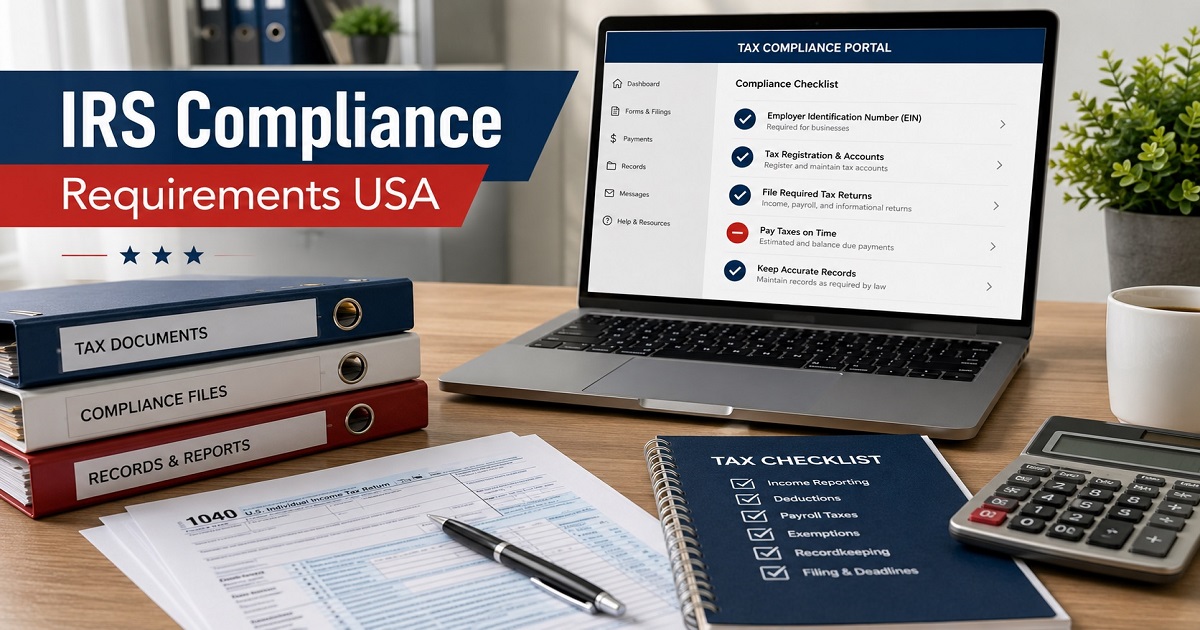
Using a federal tax compliance checklist can make sure you don’t miss anything. Having digital copies aids in audit and notice responses.
Tax Reporting to IRS is done properly, IRS federal tax compliance checklist.
Step 2 – Filing the Right Forms
- Individuals: Form 1040 series (1040, 1040-SR, etc.).
- Businesses: Form 1120 for corporations, 941 for payroll, 1099 for contractors.
Use the official IRS portal or tax software that is approved by the IRS. Be aware of deadlines so you don’t find yourself needing IRS late filing assistance.
IRC Section 6651 provides for penalties for late filing of 1120, so timely filing is important.
Step 3 – Pay Any Tax Owed
- Payment methods: IRS Direct Pay, EFTPS, or bank transfers.
- Late payments may incur interest and penalties.
If they are having trouble paying their taxes in a timely fashion, they can ask to have the penalty reduced or apply for an installment agreement, which may be available with the help of experts such as Advocate Shahid.
Don’t forget to use the IRS penalty reduction tips or IRS late filing help.
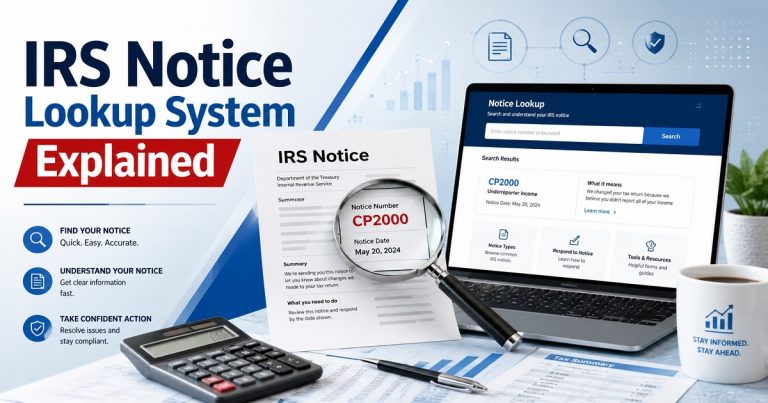
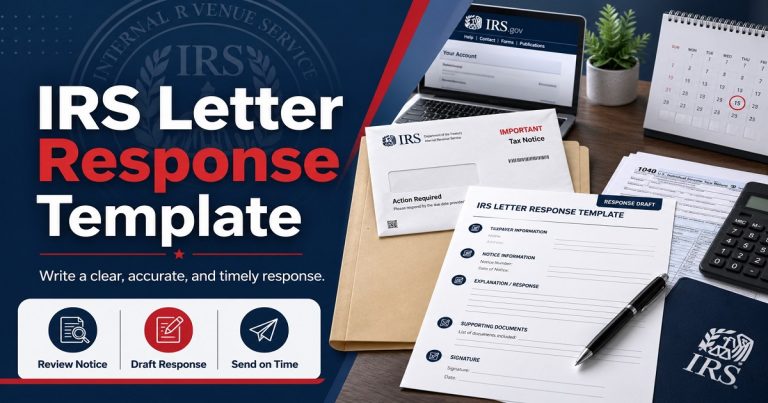
Step 4 – Responding to IRS Notices
- Identify the type of notice (e.g., underpayment, missing forms, audit notice).
- Review your records to confirm accuracy.
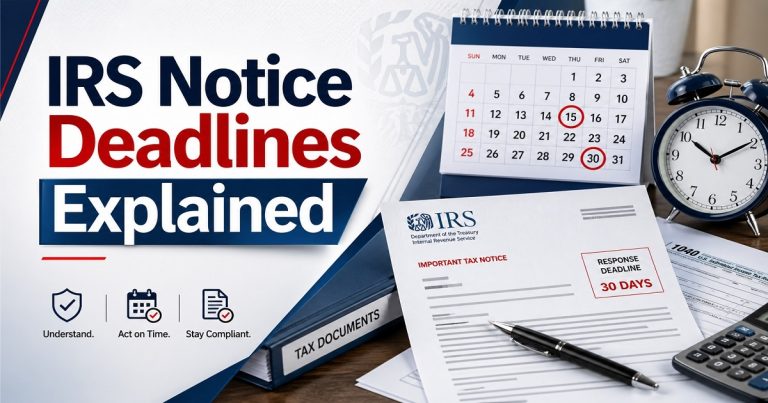
- Respond with documentation within the specified deadline
Common IRS Compliance Mistakes
Frequent Errors
- Late filings and payments
- Missing or incorrect forms
- Misreporting income or deductions
- Not issuing required 1099s
A stepwise IRS reporting guidance can help alleviate these mistakes.
How to Correct Errors
- Form 1040-X: For individual tax return corrections.
- Corrected 1099s: For contractor reporting errors.
- Professional guidance helps maximize IRS penalty waiver options.
Legal and Regulatory Framework
Compliance is governed by federal law and IRS codes. Relevant sections include:
- IRC Section 6702: Penalties for frivolous returns.
- IRC Section 6651: Failure to file or pay penalties.
- Underpayments are covered by IR Code Section 6662: Accuracy-related penalties.
IRS Audit Procedures
- The audits can be triggered as a result of mismatching, size of deductions, or random pick.
- Comprehensive documentation is required.
- In the real life scenario, a small business had to submit payroll and expense records for a business audit and thus, incurred no fines for complying.
IRS Compliance for Businesses
- Payroll compliance: Quarterly filing of Form 941.
- Corporate income reporting: Form 1120.
- Independent contractors: Distribute 1099s to those contractors who receive payments from the company of $600 or more for the year.
Professional Assistance
Some situations require professional guidance:
- Audit representation
- Penalty mitigation
- Complex filings
Costs, Fees, and Penalties
Non-compliance can be costly:
- Failure-to-file: 5% of unpaid taxes per month (max 25%).
- Failure-to-pay: 0.5% per month (max 25%).
- Accuracy-related penalties: 20% of underpayment.
Conclusion
IRS compliance is not simply an annual obligation of filing a tax return in the USA. All of them are based on accurate income reporting, timely filing, tax payment, record-keeping and prompt response to IRS notices. As an individual, freelancer, small business, corporation or nonprofit, compliance saves you from penalties and audits, interest charges and unnecessary legal stress.
It’s best to remain organized all year, collect all W2s, 1099s, receipts, payroll records and business documents in one place and file and pay via the official IRS website or tax software that you trust. When you’re sent a notice by IRS, do not ignore it. Carefully review the issue, collect supporting documents and reply before deadline.
If the task is a straightforward task of tax, a clear checklist might suffice. However, when IRS penalties are looming, IRS questions are being asked, unpaid taxes are a concern, IRS business reporting issues are a concern, or IRS compliance issues are complex, a professional service can help shield you from greater financial risks. A qualified tax consultant, IRS compliance expert or tax lawyer can navigate you through the process, correct your errors, and assist you in getting a handle on the IRS.
To sum up, being proactive, accurate, organized and seeking assistance when necessary makes IRS compliance more manageable. It is always better to be proactive than reactive with compliance – i.e. before a penalty, audit or enforcement notice.
FAQs
What are IRS compliance requirements?
Mandatory reporting of income, payment of taxes and record keeping.
How do I stay compliant with IRS?
Complete all necessary forms promptly, properly declare income and maintain comprehensive records.
What happens if I ignore IRS compliance?
Penalties, audits, interest and possible litigation.
How to respond to IRS notice?
Read the notice, collect the items in question, and follow IRS instructions.
What IRS forms are required for compliance?
Individuals: 1040 series. Businesses: 1120, 941, 1099.
Can a lawyer help with IRS compliance?
Yes, a professional firm such as Advocate Shahid can help with your audit, penalties and filing.
When is IRS compliance required for businesses?
Payroll is processed, contractor payments are made or whenever income is earned.
How to check my IRS compliance status?
Take a look at your IRS account online, notice any notices, and complete IRS returns.
Key Takeaways
- You can’t escape penalties and audits by failing to remain IRS compliant.
Adhere to a step by step procedure in collecting documents, filing and payment.
Make corrections for any errors as soon as possible to prevent additional problems.
With a professional helping you, compliance assistance is greatly simplified, especially in cases that are complex.
References / Official Resources
- Receiving IRS Official Forms & Guidance
- IRS Code Sections: 6702, 6651, 6662